Software Components
The Software Components page lists all software discovered across your Windows and Linux machines. Software is collected by enabling the Discover Software option on a discovery job — this page covers how to view, edit, and manage the resulting software components.
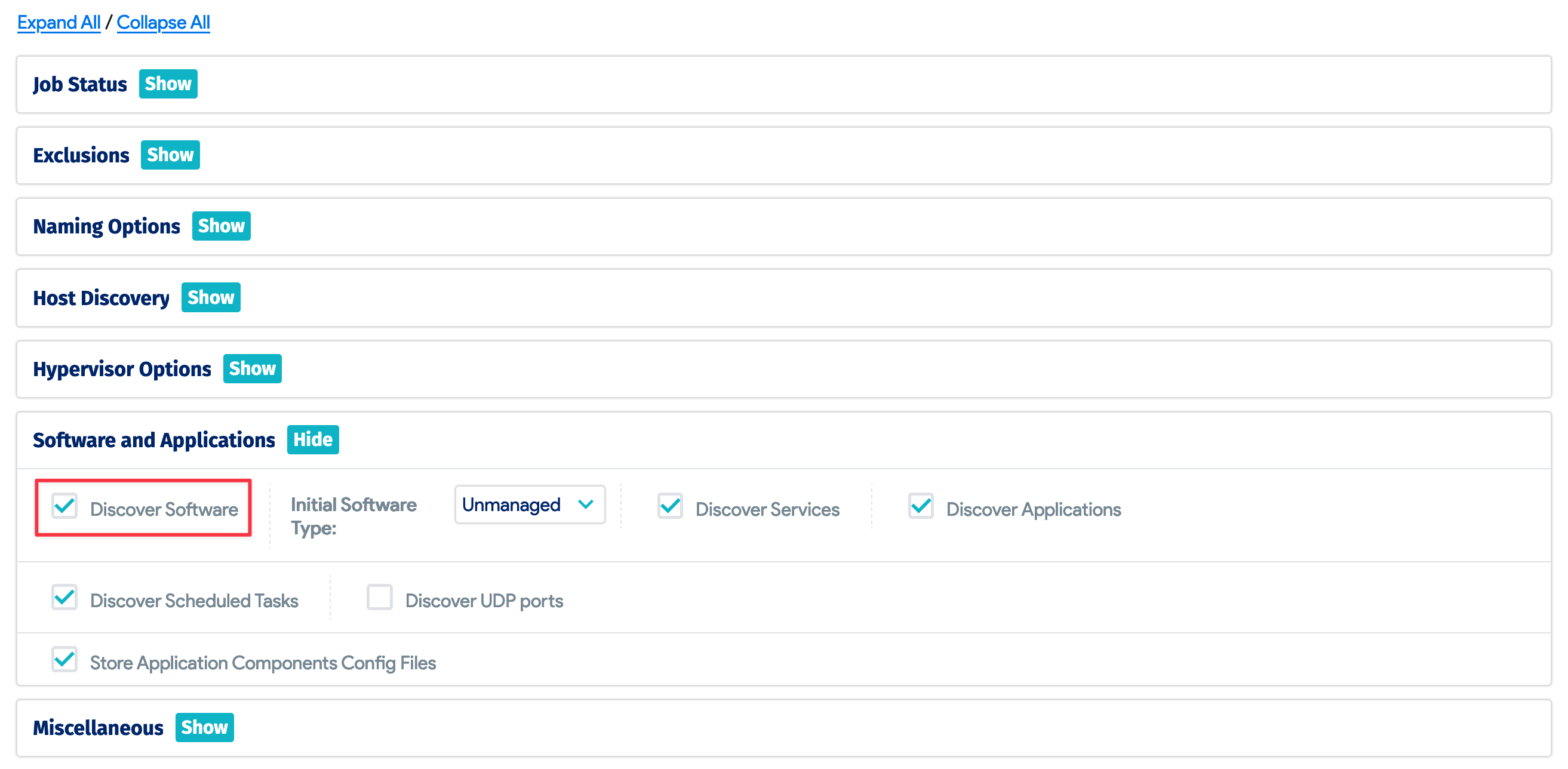
When creating or editing a discovery job under Discovery > Hypervisors or *nix or Windows, you will see the following form:
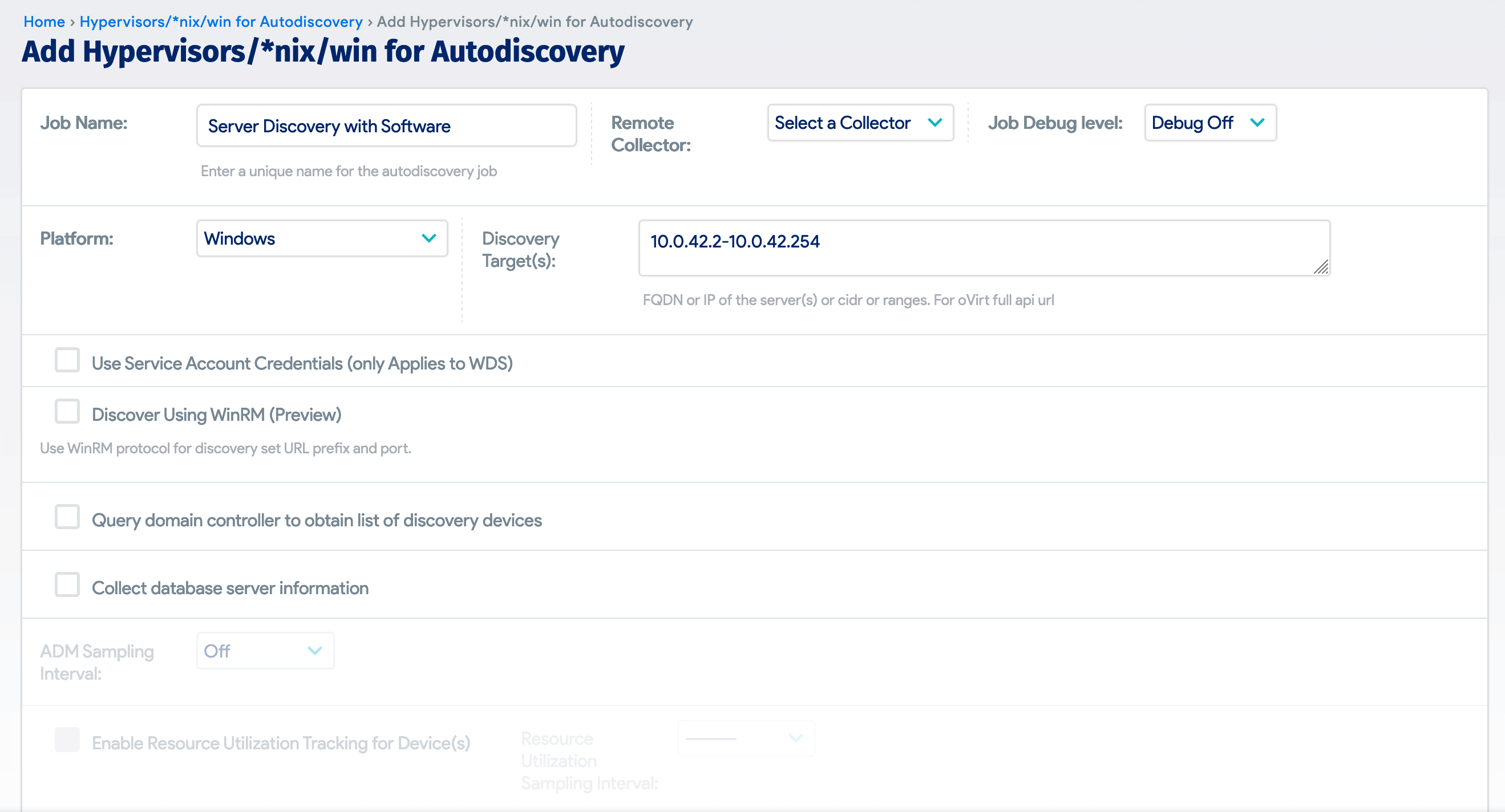
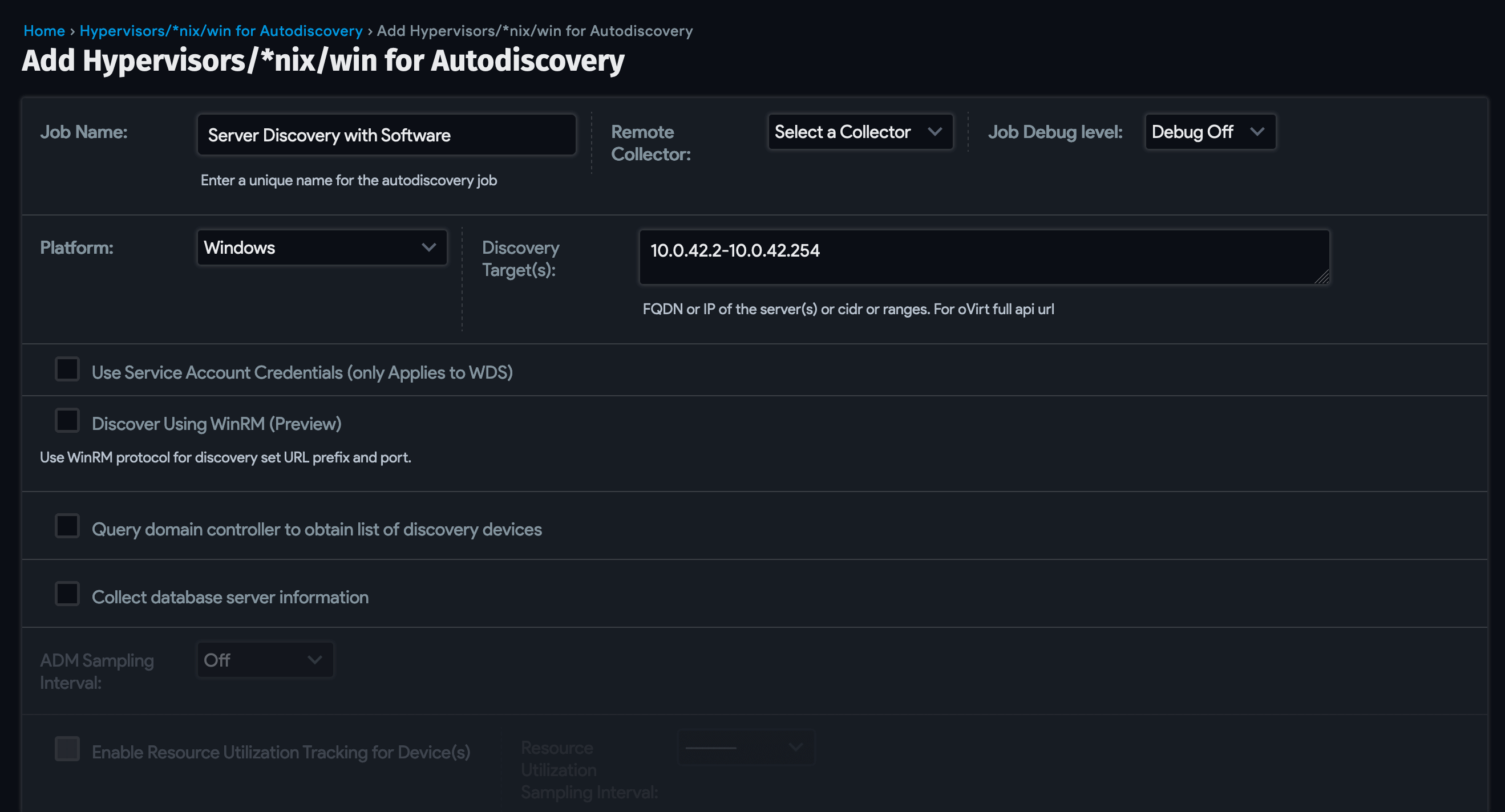
Scroll down to the Software and Applications section. By default, Discover Software is enabled to discover software on Windows and Linux machines in the defined CIDR blocks, hostnames, domain servers, or IP range(s).
All major Linux distributions are supported, and software registered across various package managers will be discovered.
View Software Components
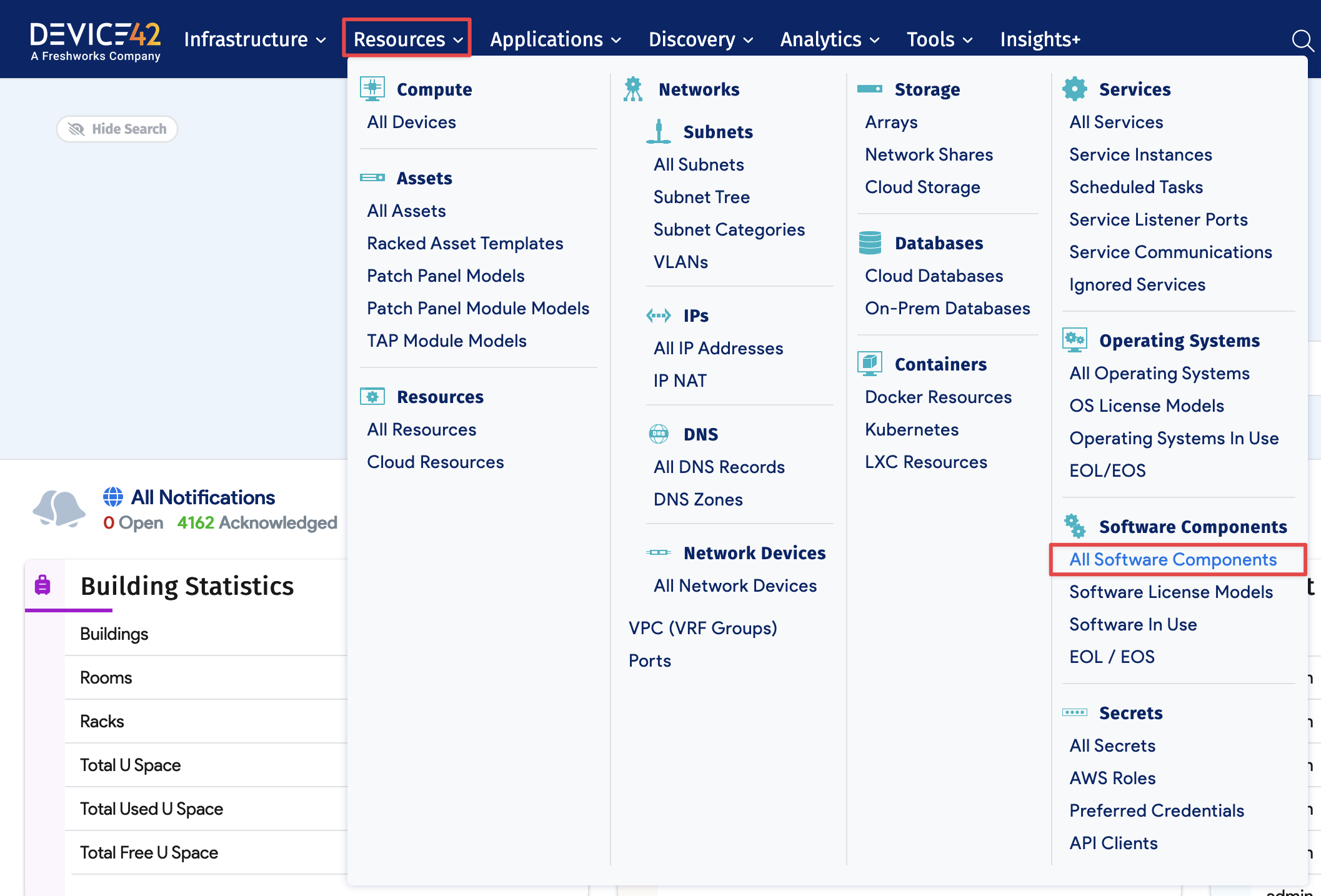
To view the full list of discovered software, navigate to Resources > Software Components > All Software Components.
As with other list views in Device42, you can sort the discovered software components using the column headers, filter using the Advanced filters on the right, or search using the search box at the top. Use the Actions dropdown for bulk actions.
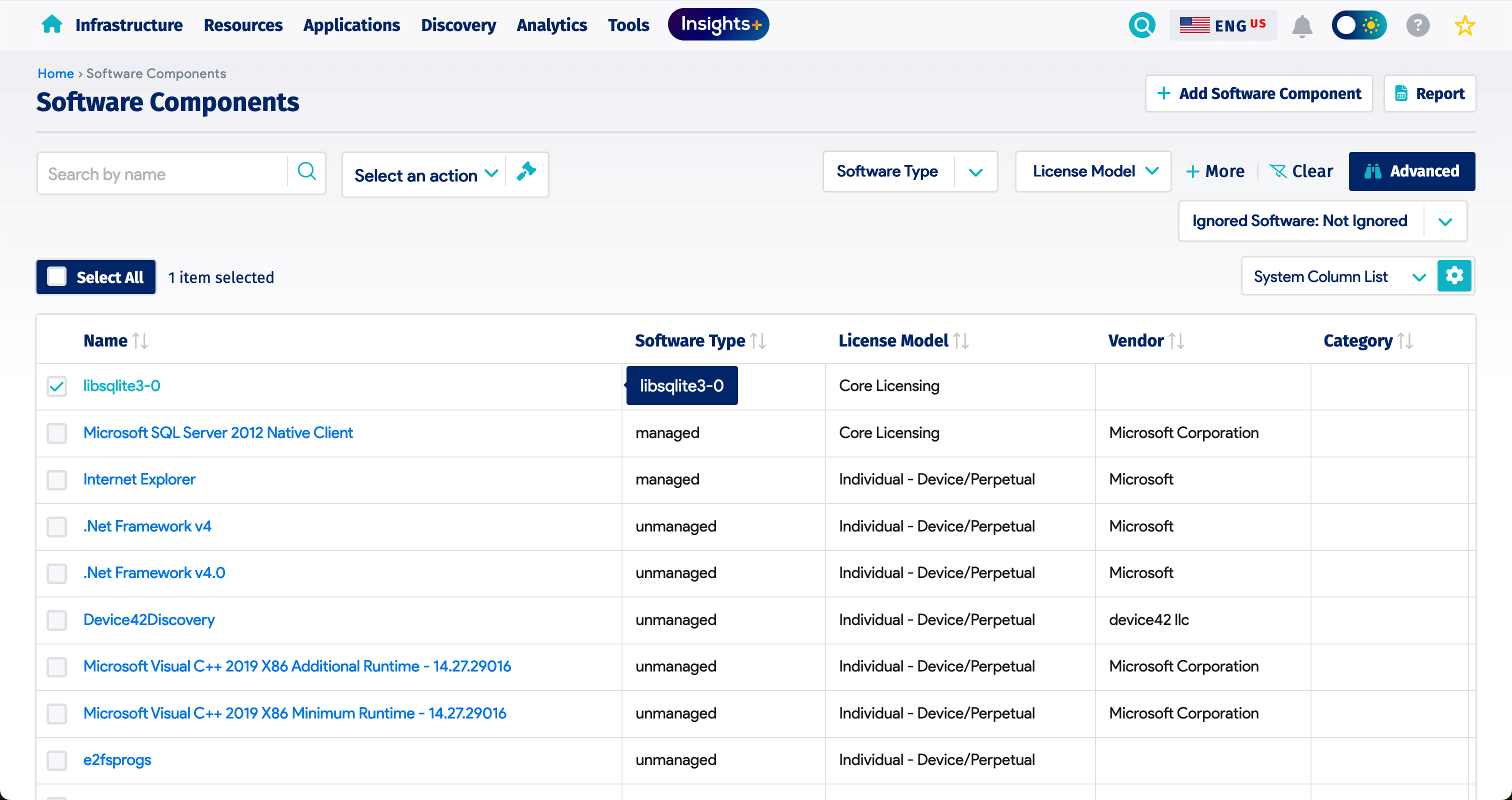
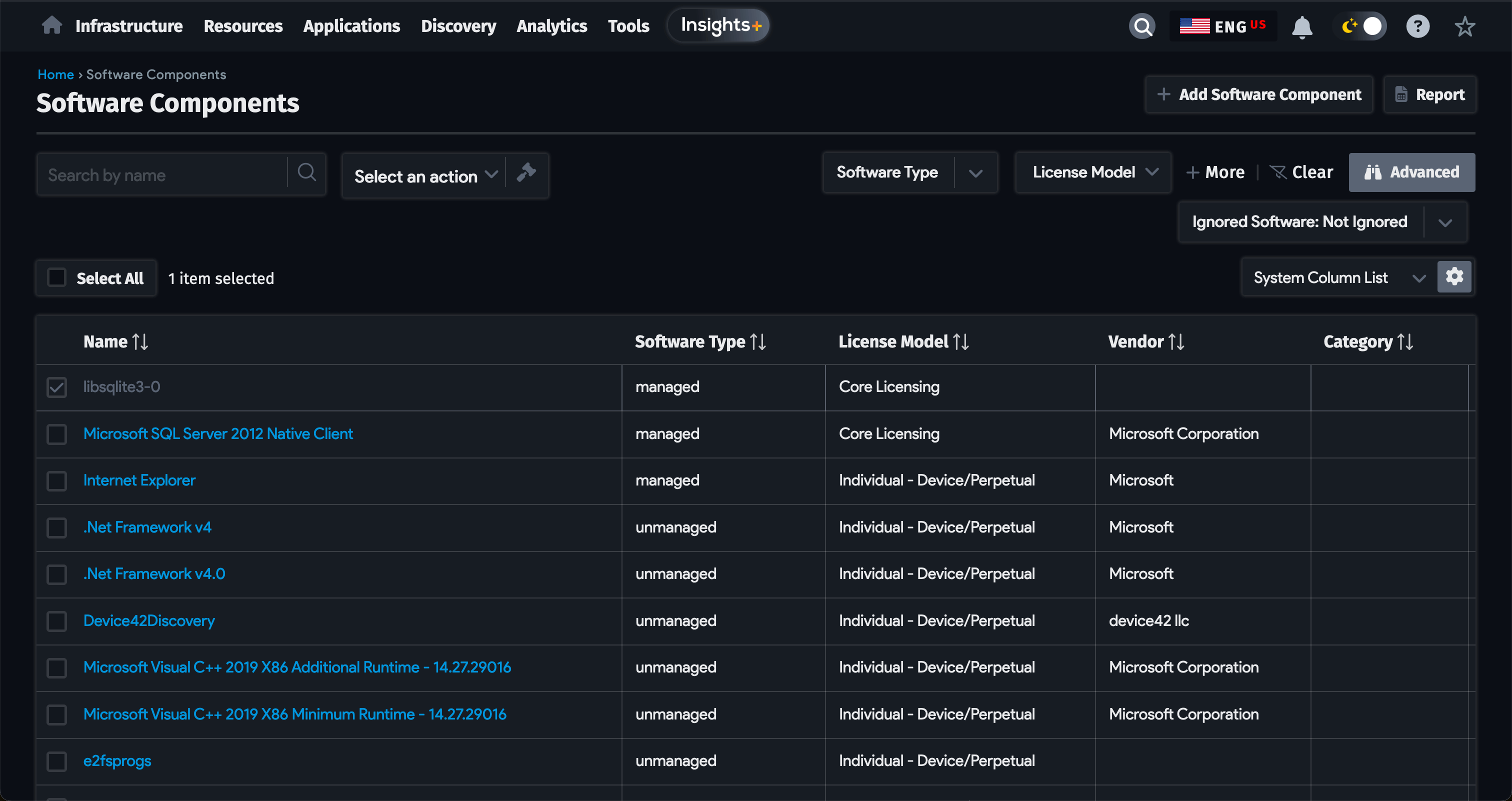
Click the software Name to view and edit an existing component.
Manually Add a Software Component
Click Add Software Component to add a new component.
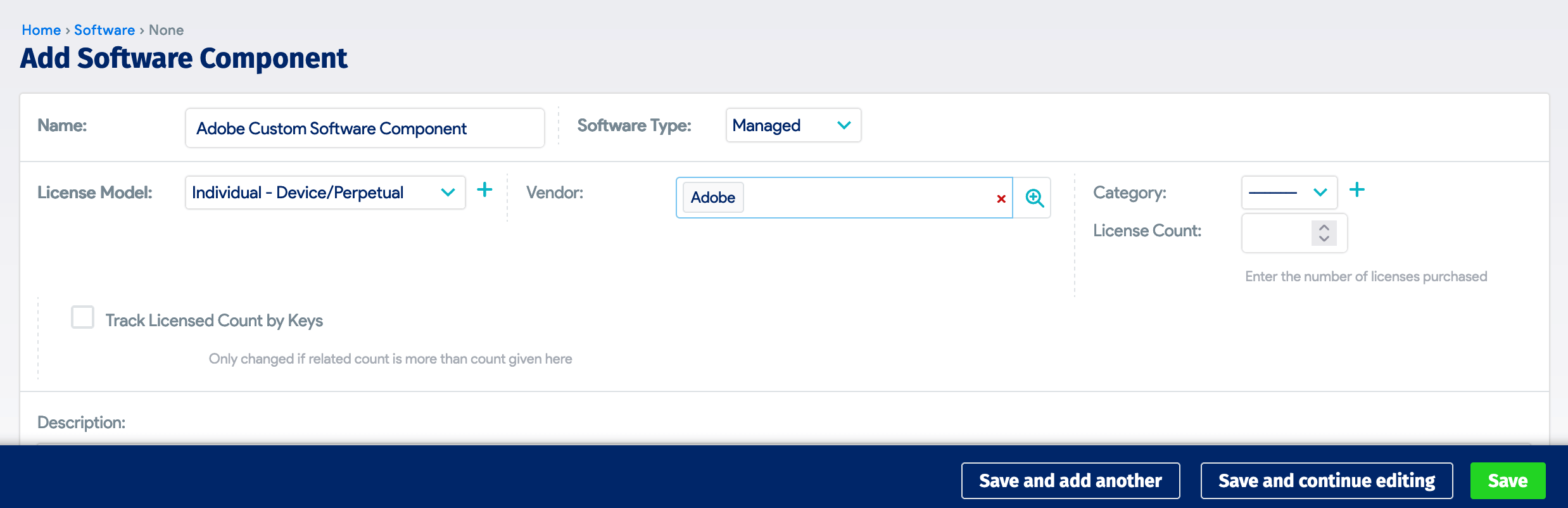
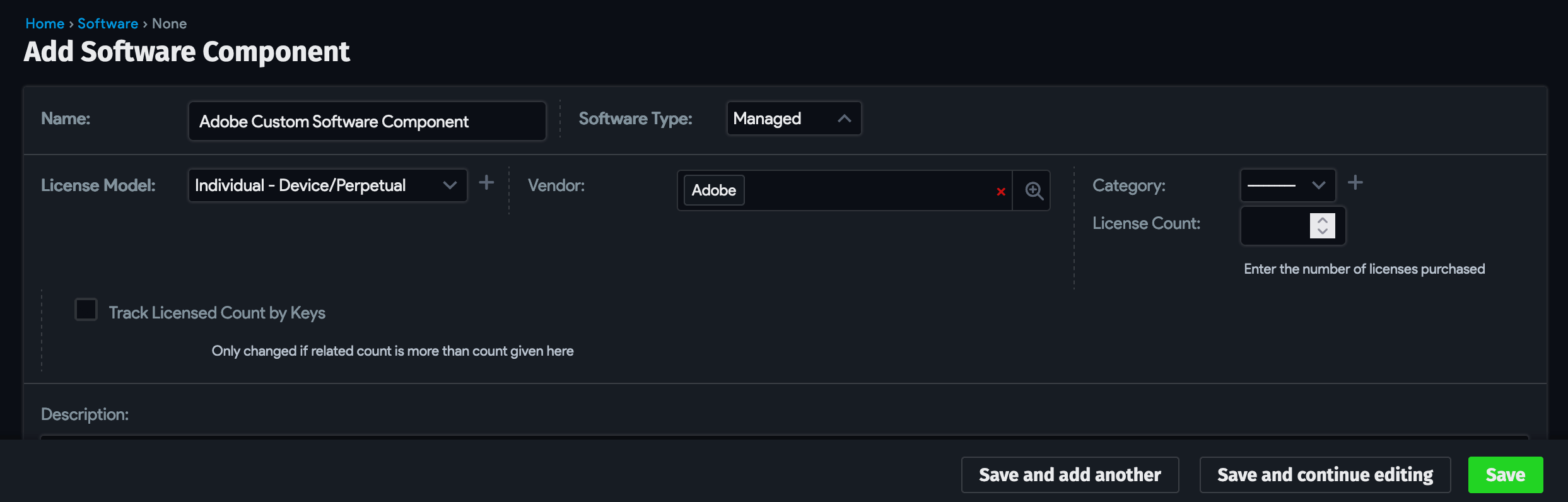
Enter the Name, Software Type, and License Model. You can also enter Notes and Tags. Click Save at the bottom of the page to save the component.
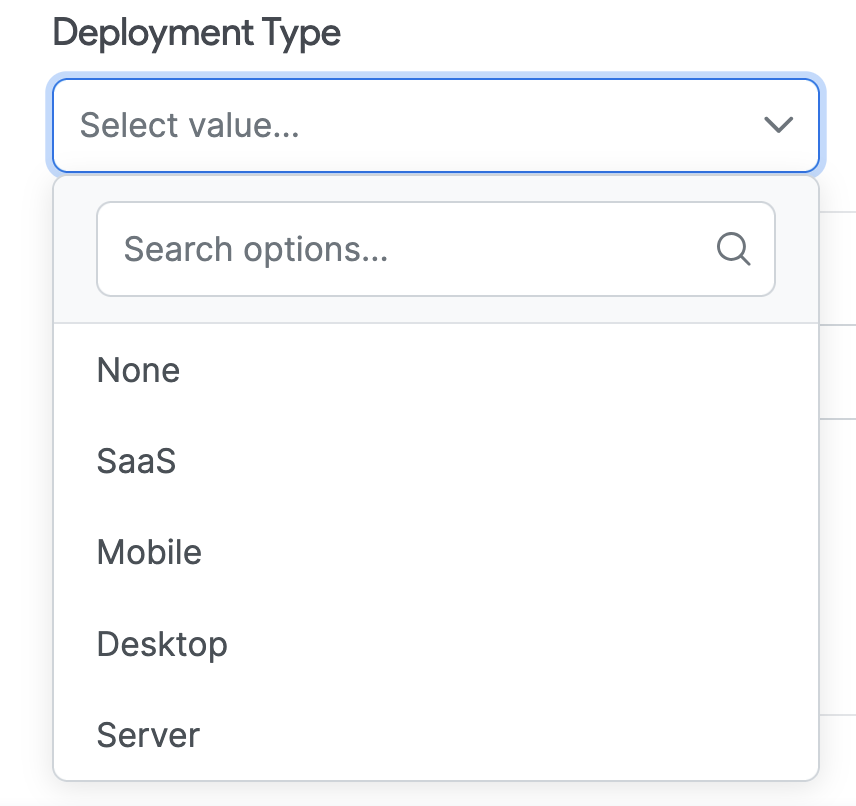
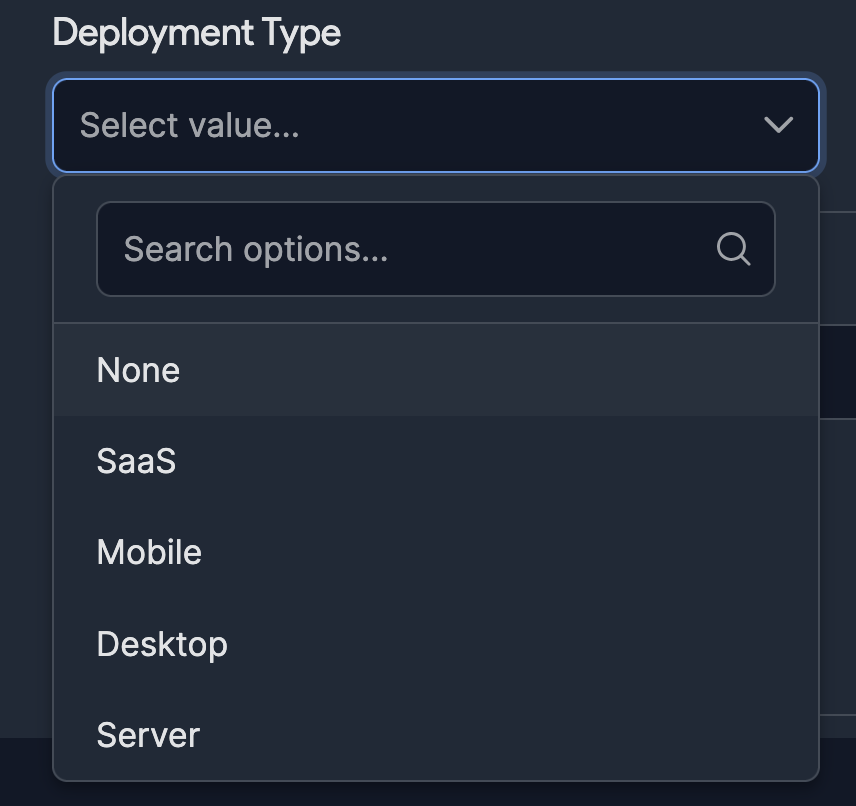
For better tracking and reporting, you can select a Deployment Type to categorize your software assets:
- SaaS: Applications hosted via the cloud
- Mobile: Applications designed for mobile devices (smartphones, tablets)
- Desktop: Applications installed and running on desktop or laptop computers
- Server: Applications running on server infrastructure
Edit a Software Component
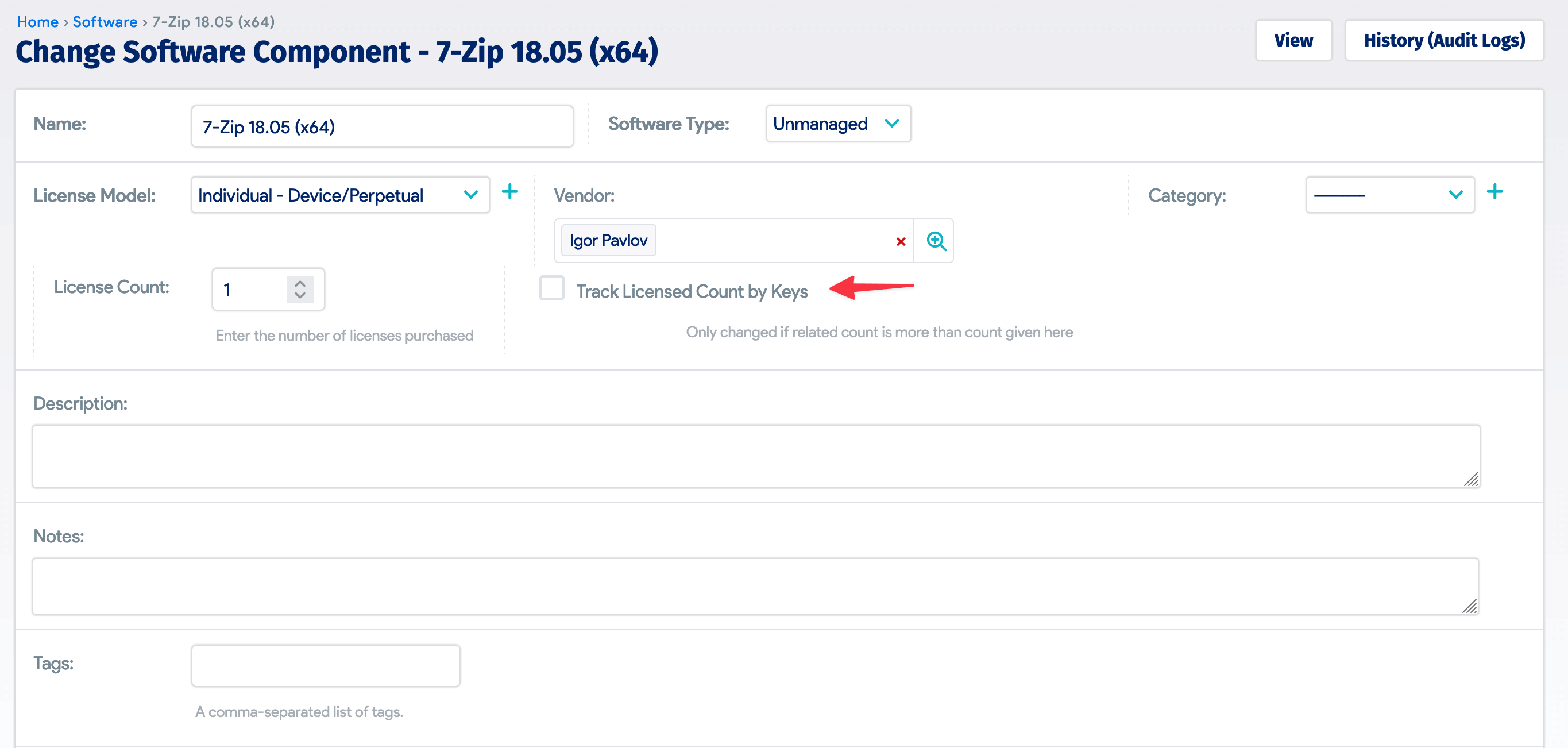
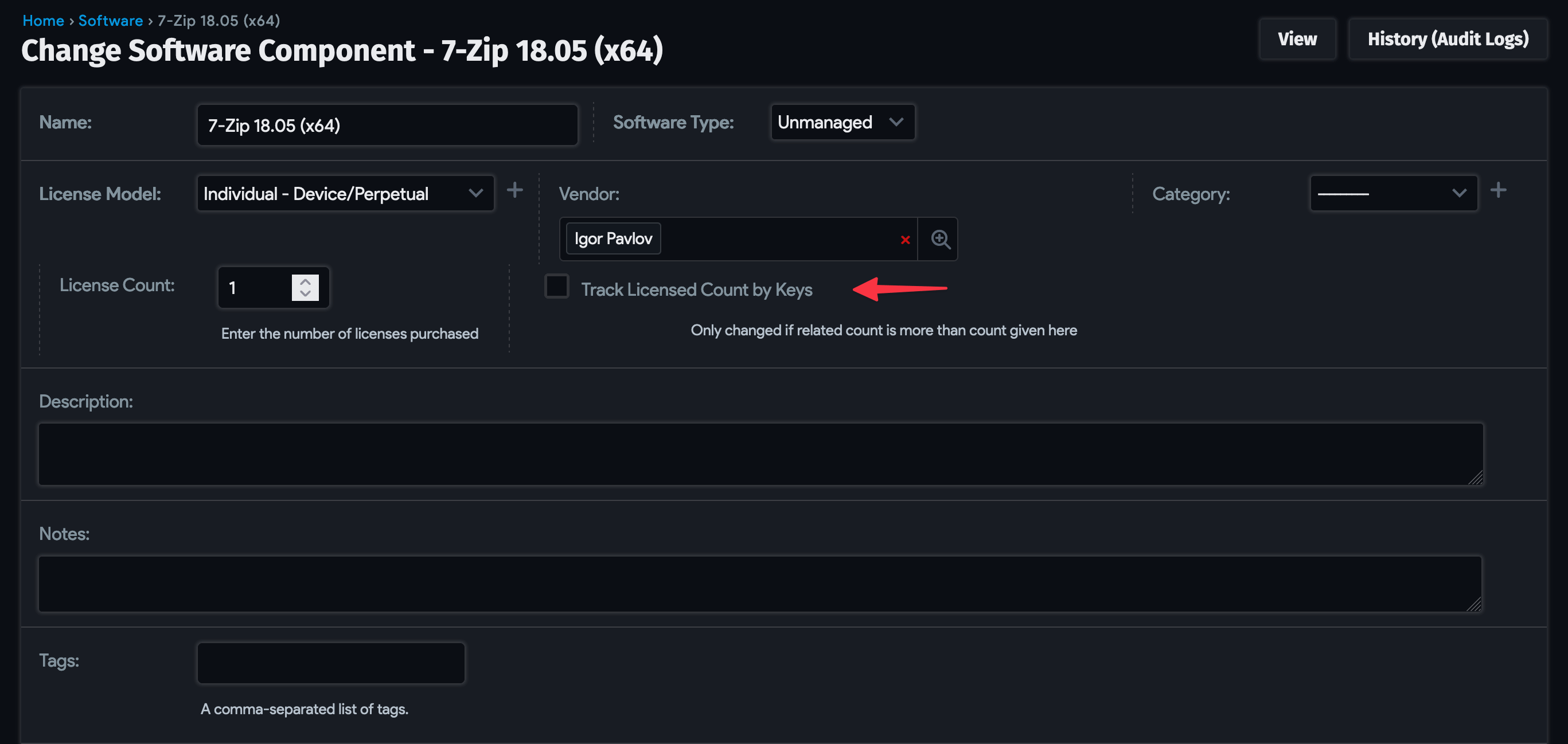
Click the name of a software component and select Edit to add additional details to its record. For example, you can specify a License Model, select a Vendor, add and define a Category, and add Notes and Tags.
Check the Track Licensed Count by Keys checkbox to base the software usage count on keys, rather than the total number of software component instances.
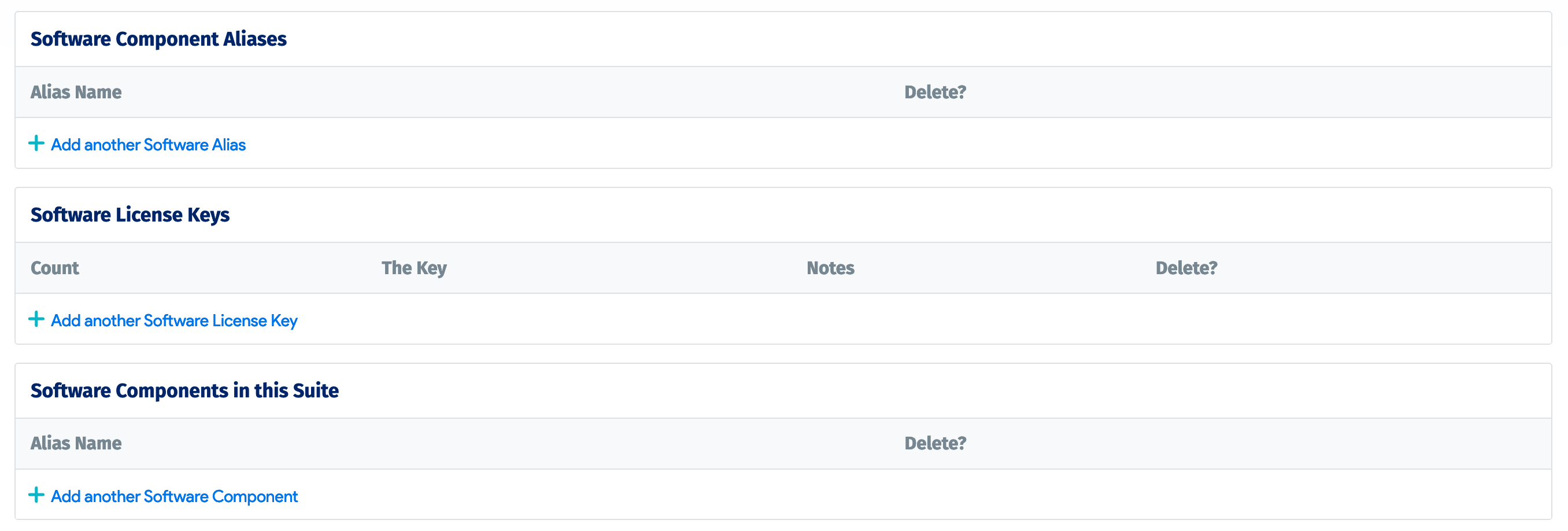
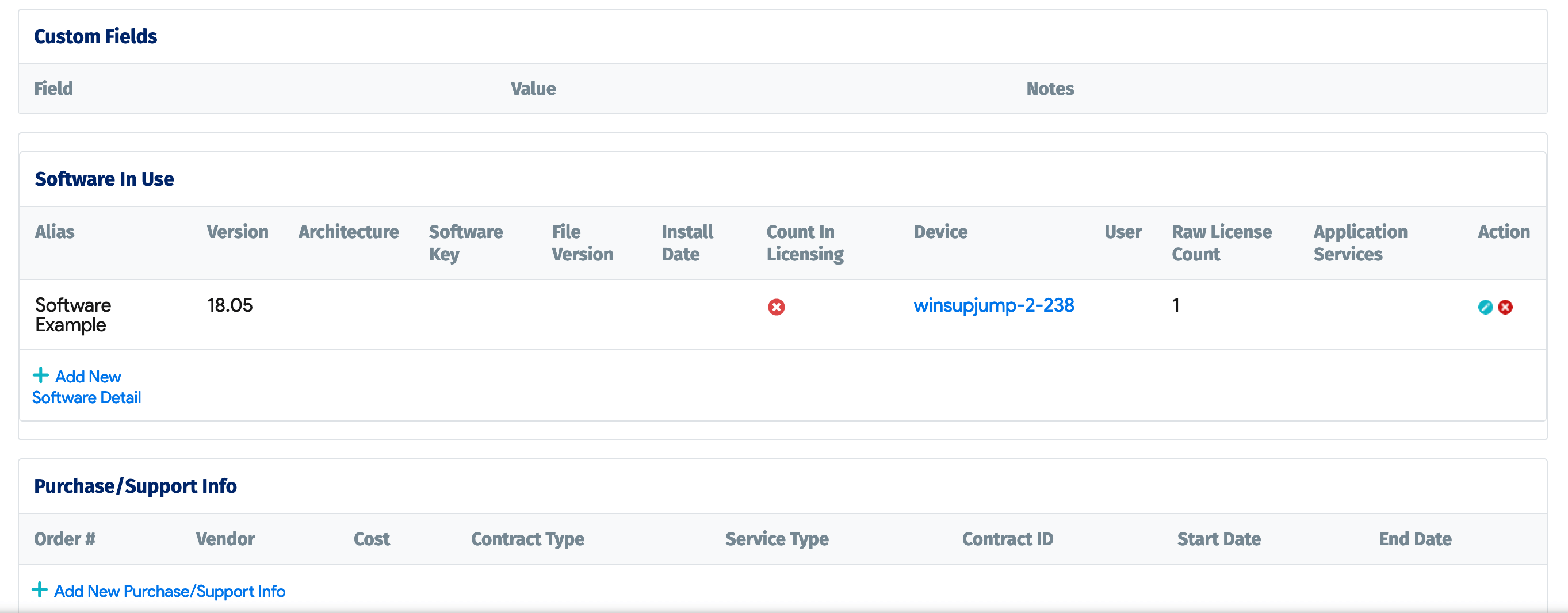
You can also add Software Component Aliases and Software License Keys, view the actual instances of the discovered software under Software In Use, and add Purchase/Support Info.
Bulk Actions
On the All Software Components list page, you can make bulk modifications to specific software components:
- Use the checkbox to the left of each instance to choose records from the list.
- Select an action from the Actions dropdown.
- In the dialog, confirm to execute the action.
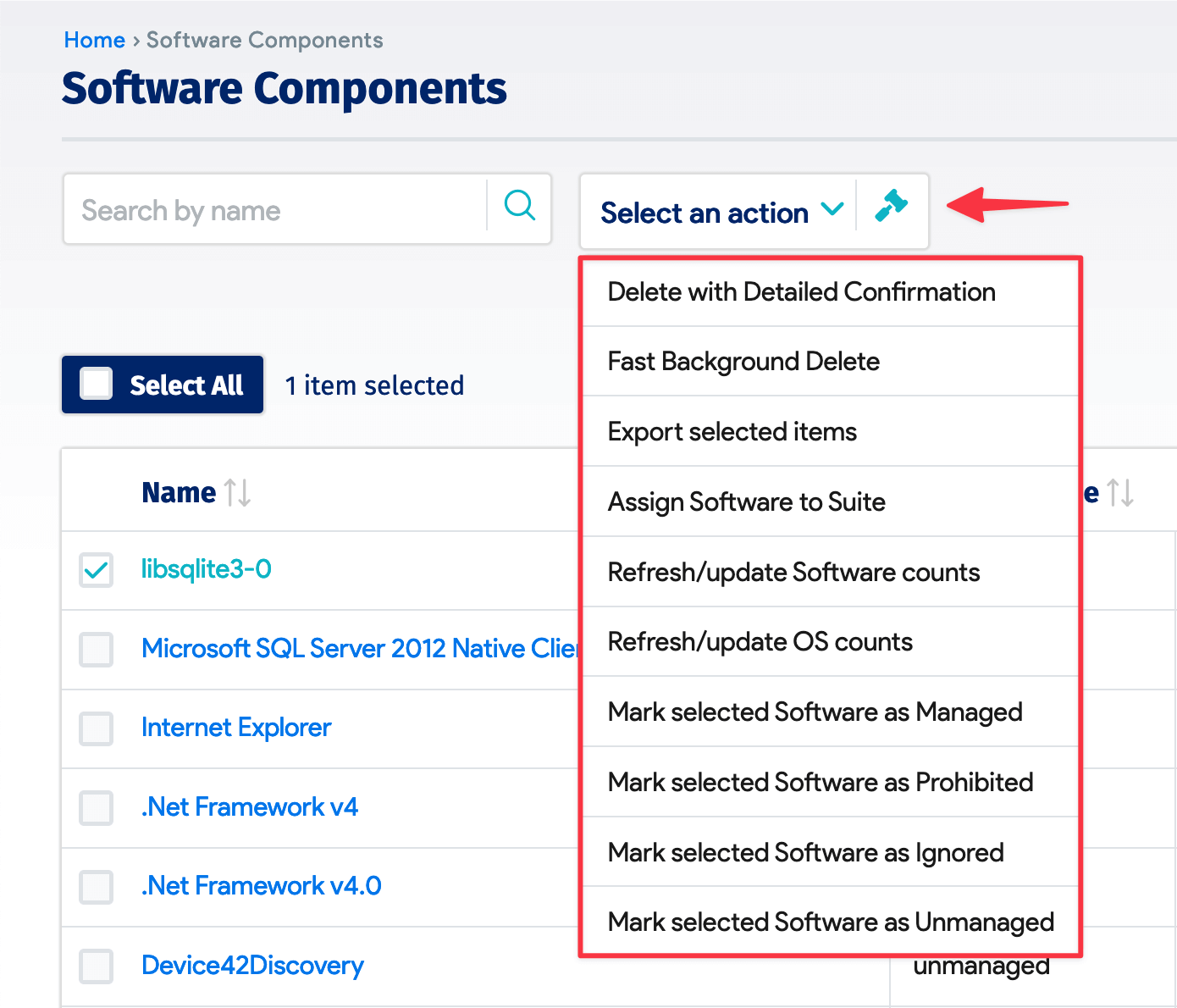
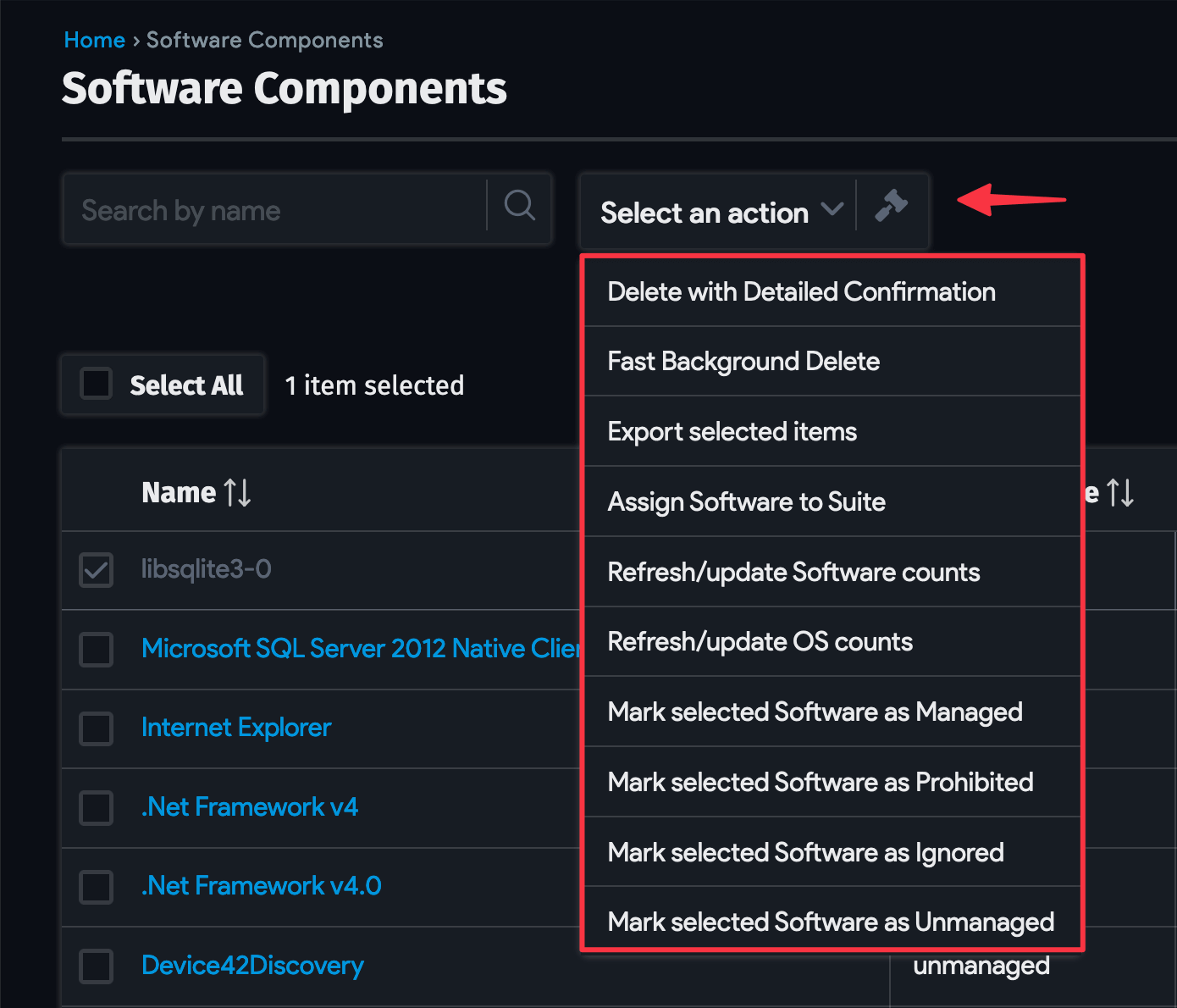
The available actions are:
- Delete with Detailed Confirmation
- Fast Background Delete
- Export selected items
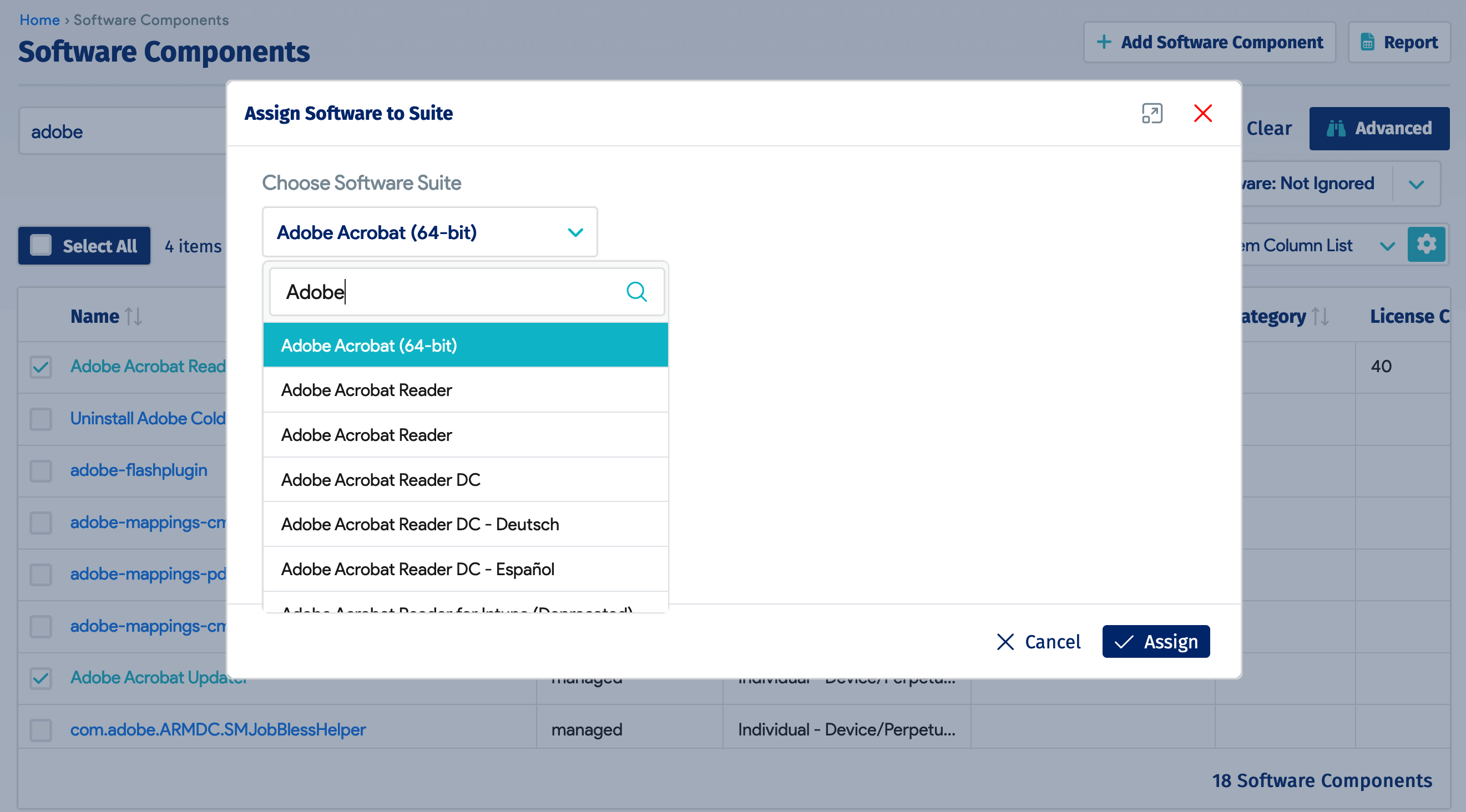
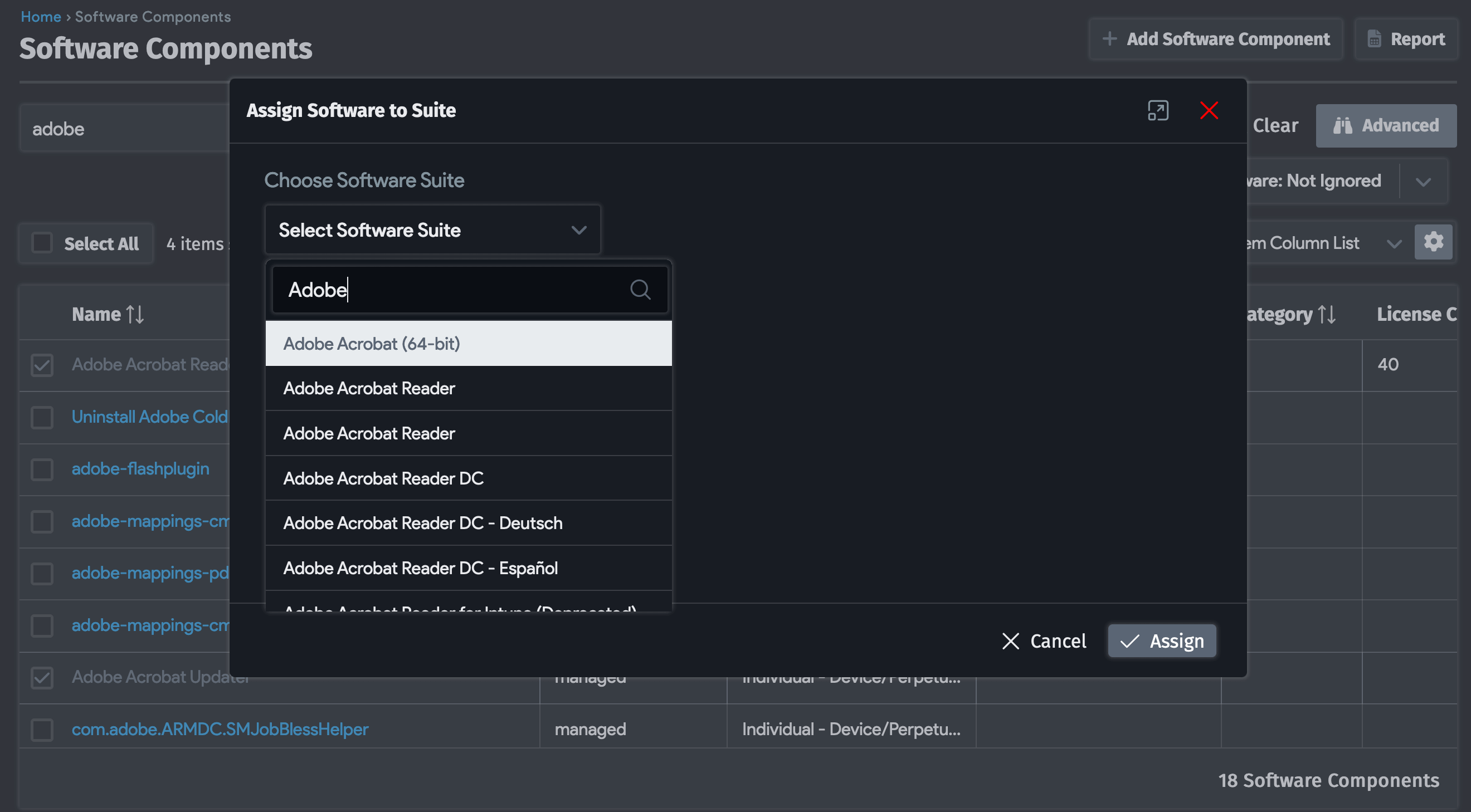
- Assign Software to Suite
- Refresh/update Software counts
- Refresh/update OS counts
- Mark selected Software as Managed
- Mark selected Software as Prohibited
- Mark selected Software as Ignored
- Mark selected Software as Unmanaged
For example, you could select several software components and choose to:
- Mark selected Software as Ignored and Device42 would remove the components from the list and ignore them in future discoveries.
- Mark selected Software as Prohibited and Device42 would send alerts whenever prohibited software was found on a user's machine (if the alert was configured).
- Refresh/update Software counts and the software counts (but not the discovery job) would be run immediately.
The Refresh/update Software counts action is useful when you have changed the licensing or software count configuration and want to see the impact of the change immediately.
Update Ignored Software Discovery Count
The Discovered Count field is automatically recalculated at a regular interval (configured in Global Settings > Software Licensing) for Managed, Unmanaged, and Prohibited software types – excluding Ignored software. Use the Refresh/update Software counts action to manually update counts for Ignored software.
Assign Software to Suite
The Assign Software to Suite action lets you group selected software components into sets for easier management and reporting.
For example, to group Adobe products, create a suite by either selecting an existing software component and defining it as a suite, or creating a new one using Add Software Component and naming it something like "Adobe Software Suite". Then select the Adobe software components from the list, choose Assign Software to Suite from the Actions dropdown, and confirm to assign them to the suite.