Device - Properties Tab
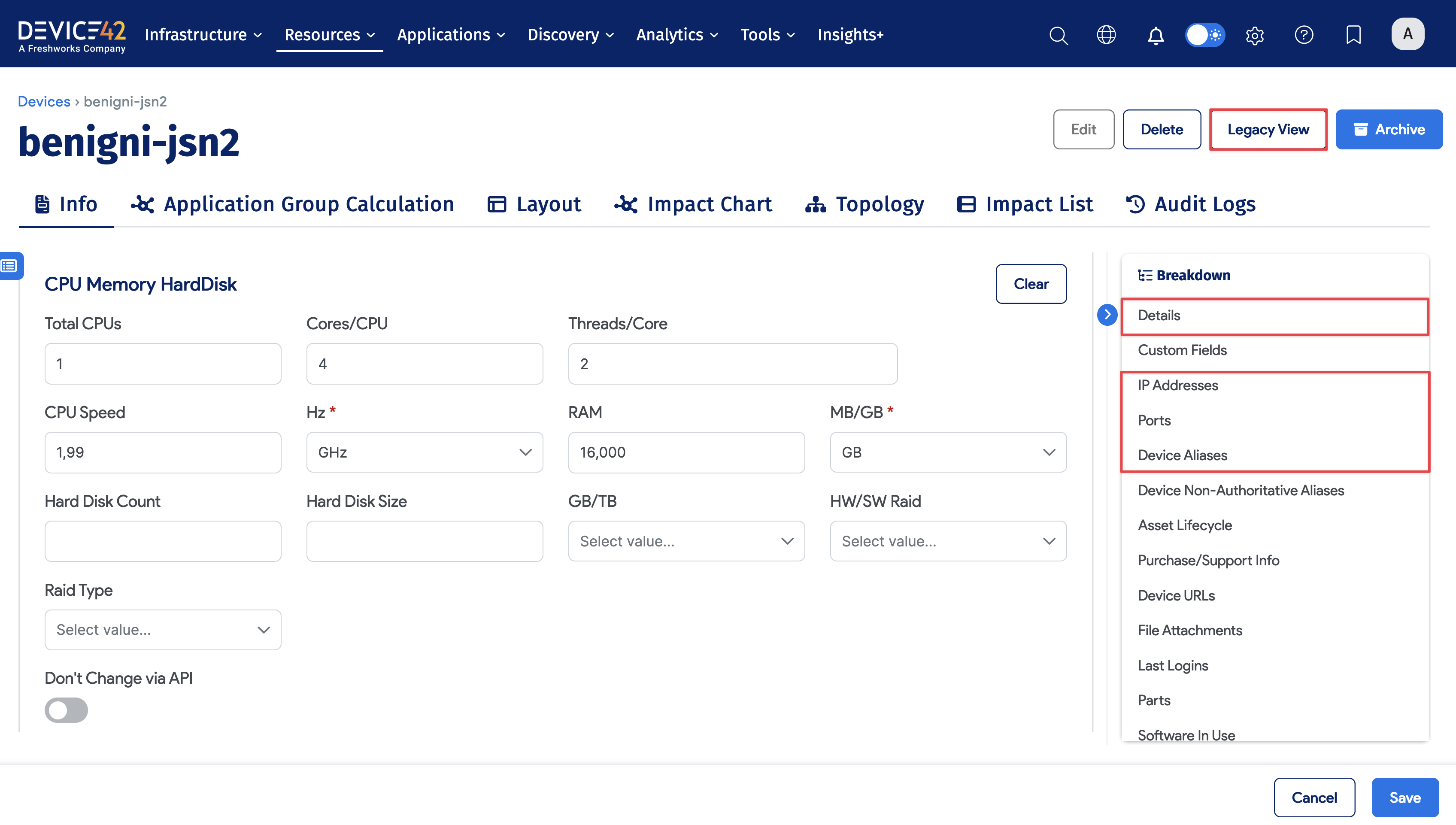
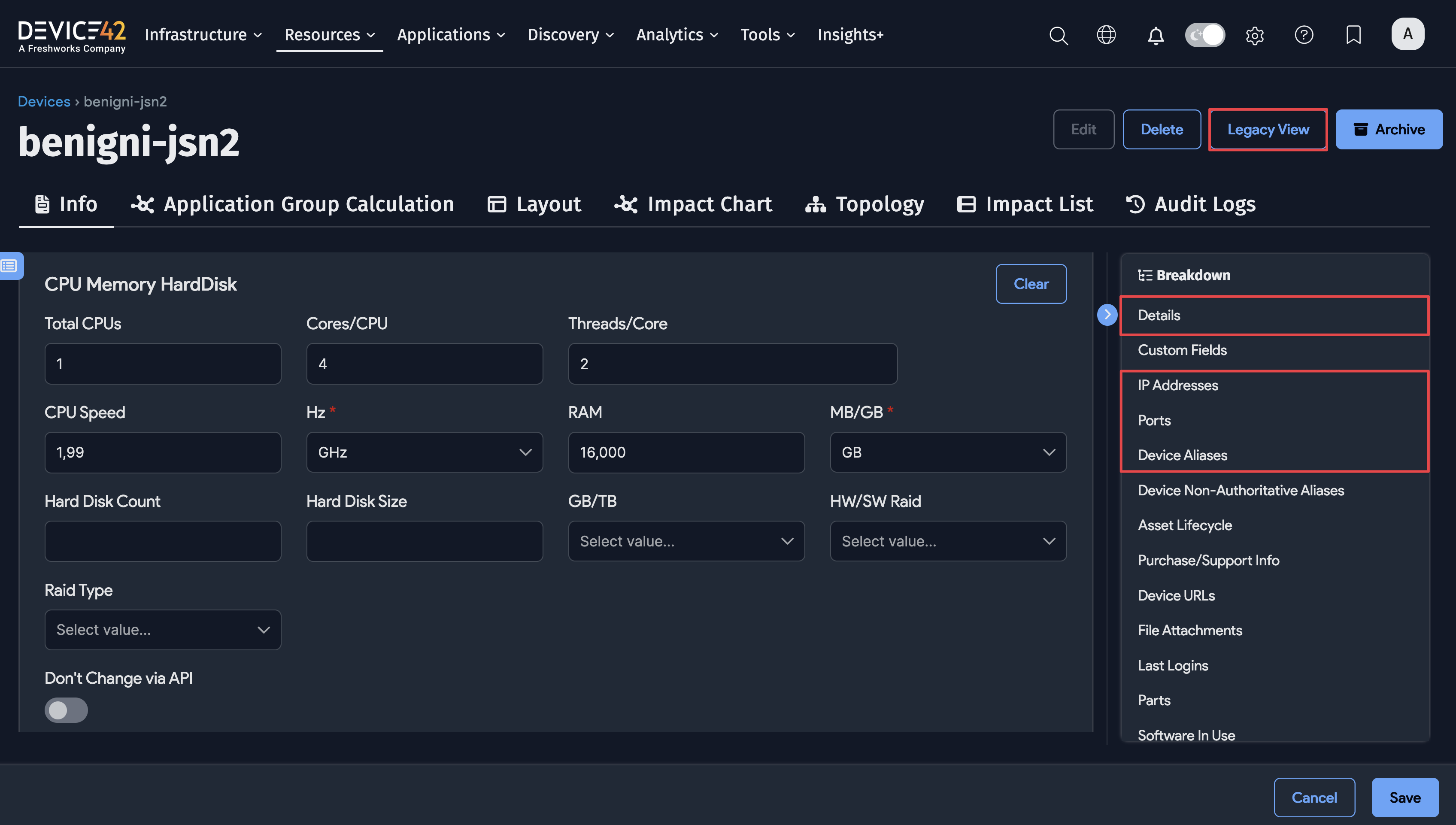
The Properties tab is a legacy view that groups hardware, OS, connectivity, and IP address details for a device. These sections are now available in the Breakdown panel on the device details page. You can still access the legacy view using the Legacy View button.
The following Properties tab sections are in the Breakdown panel:
- CPU Memory HardDisk (under Details)
- Device Operating Systems (under Details)
- Ports (previously called Connectivity)
- IP Addresses
- Device Alias
Details Section
CPU and OS information is under the Details section of the device Breakdown panel.
CPU Memory HardDisk
The CPU Memory HardDisk subsection holds values for Total CPUs, Cores/CPU, CPU Speed, total RAM, and other hard disk drive (HDD) info. Select Don't change via api if you have manually set CPU or memory values and don't want discovery jobs to overwrite them.
Device Operating Systems
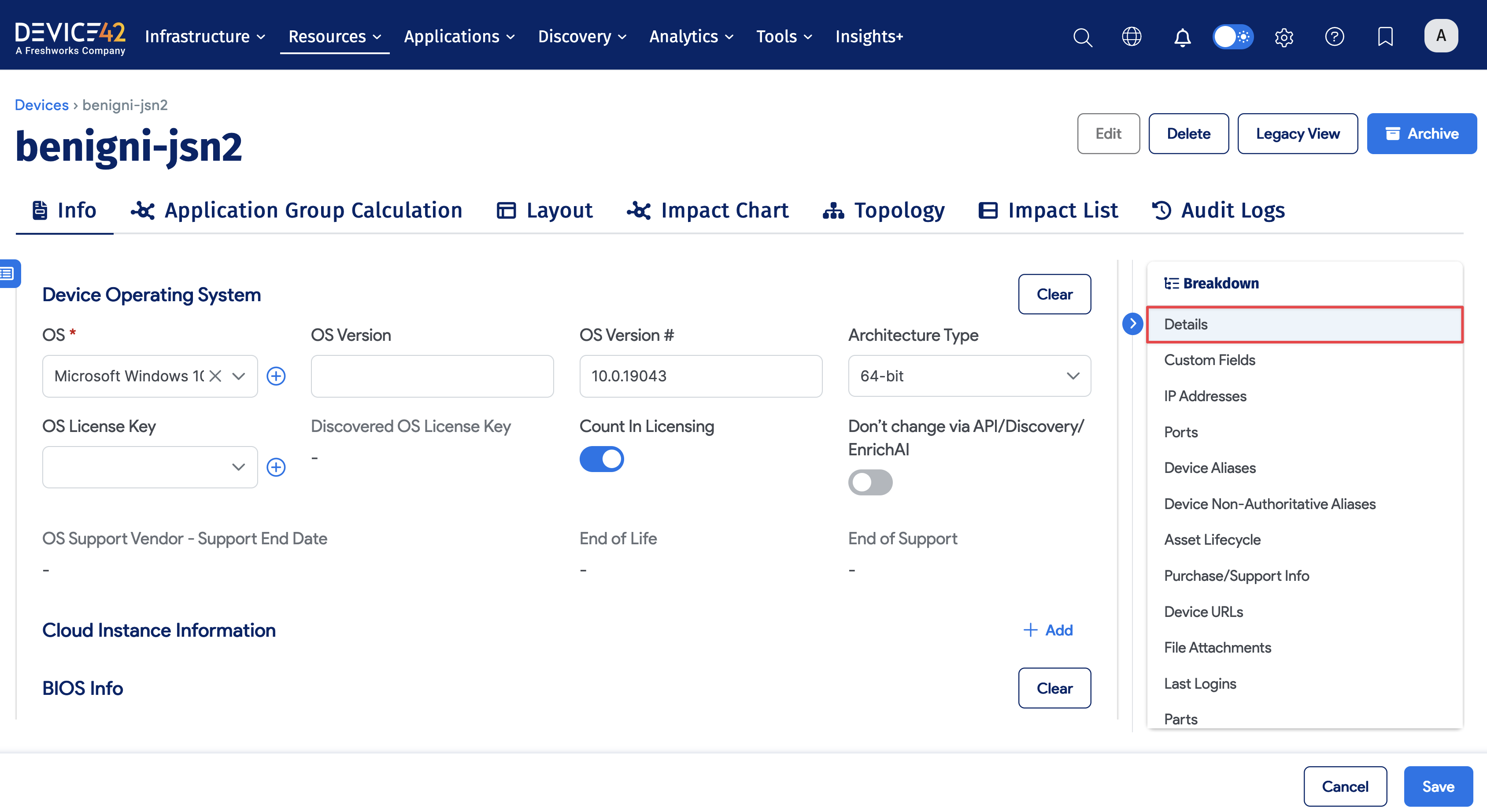
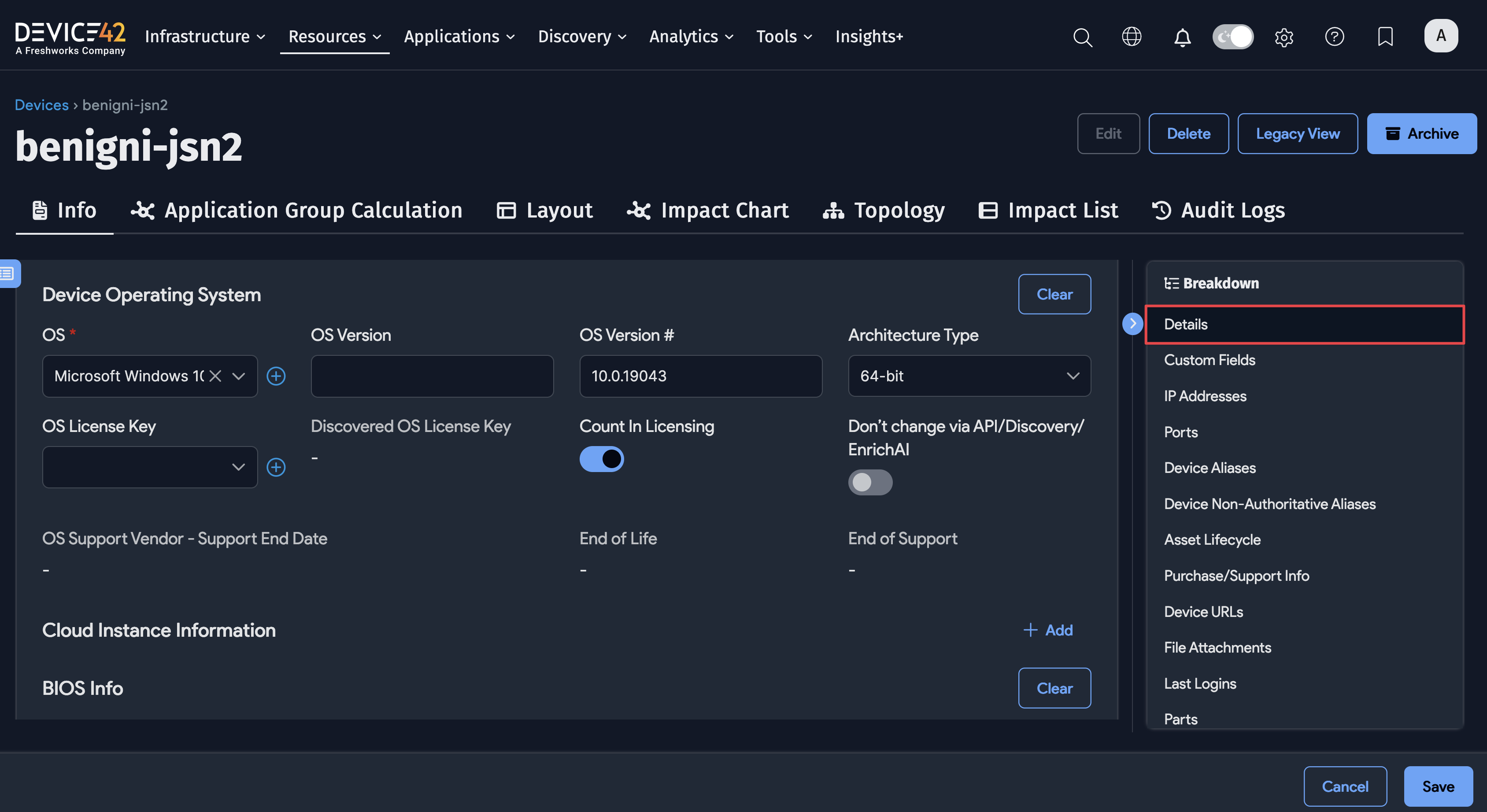
The OS, OS Version, and OS Version # fields hold the basic operating system details for each device. If the Normalization and Enrichment Service is active, these fields may be automatically populated by discovery. Vendor support details like End of Life and End of Support may also be autopopulated. If the Enriched Data service is disabled, you can manually enter the data or run scripts to populate the fields. The OS License Key field can also be entered manually.
Count In Licensing is checked by default. Uncheck it if the OS does not count towards licensing. Select Don't change via api if you have manually set these values and don't want discovery jobs to overwrite them.
If the Operating System fields are blank, you may need to rerun discovery.
Rack Info
Rack information is no longer on the Properties tab. Navigate to Resources > All Assets, click an asset, and scroll to the Rack Info section to view or edit rack details.
Ports Connectivity
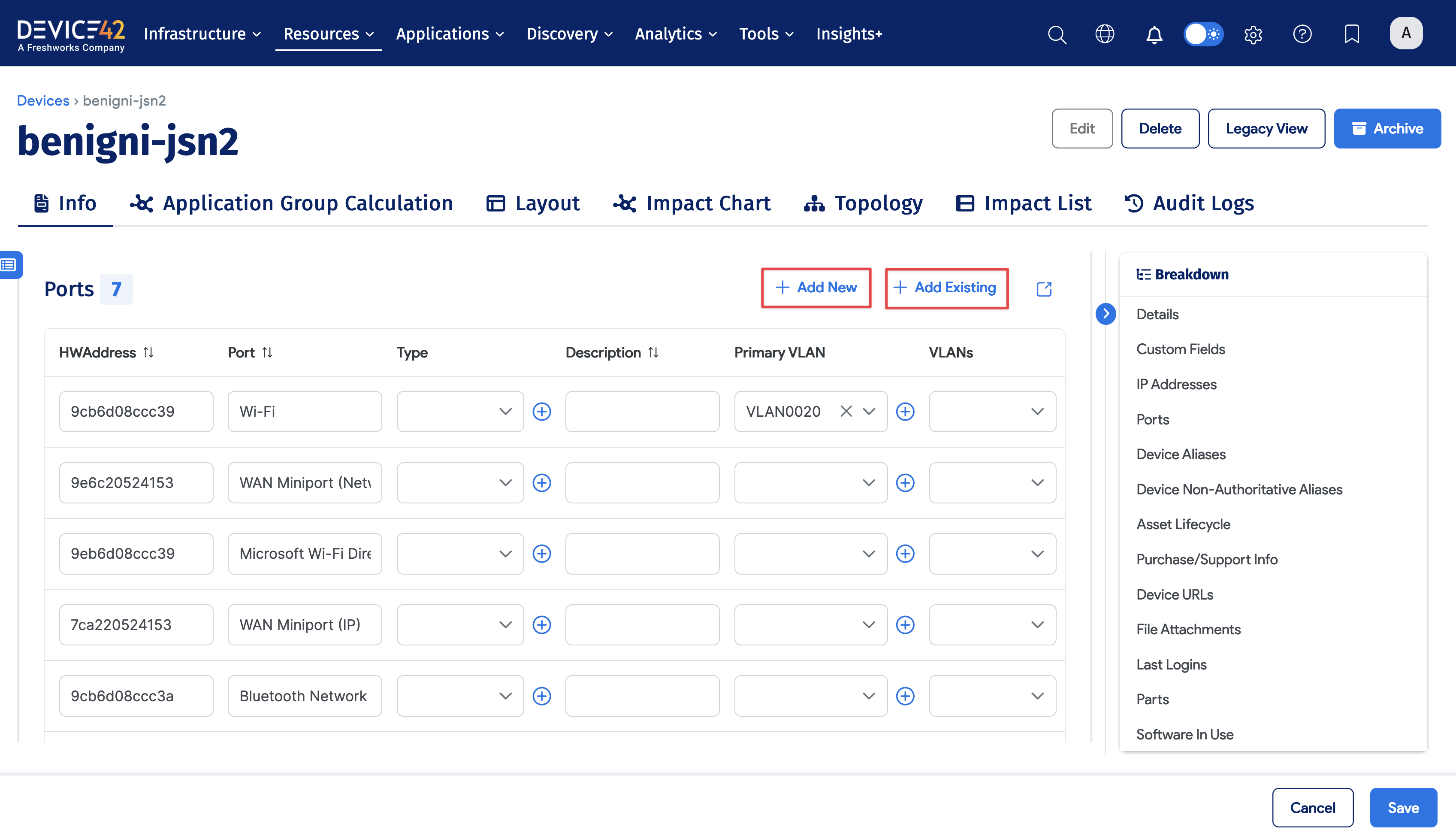
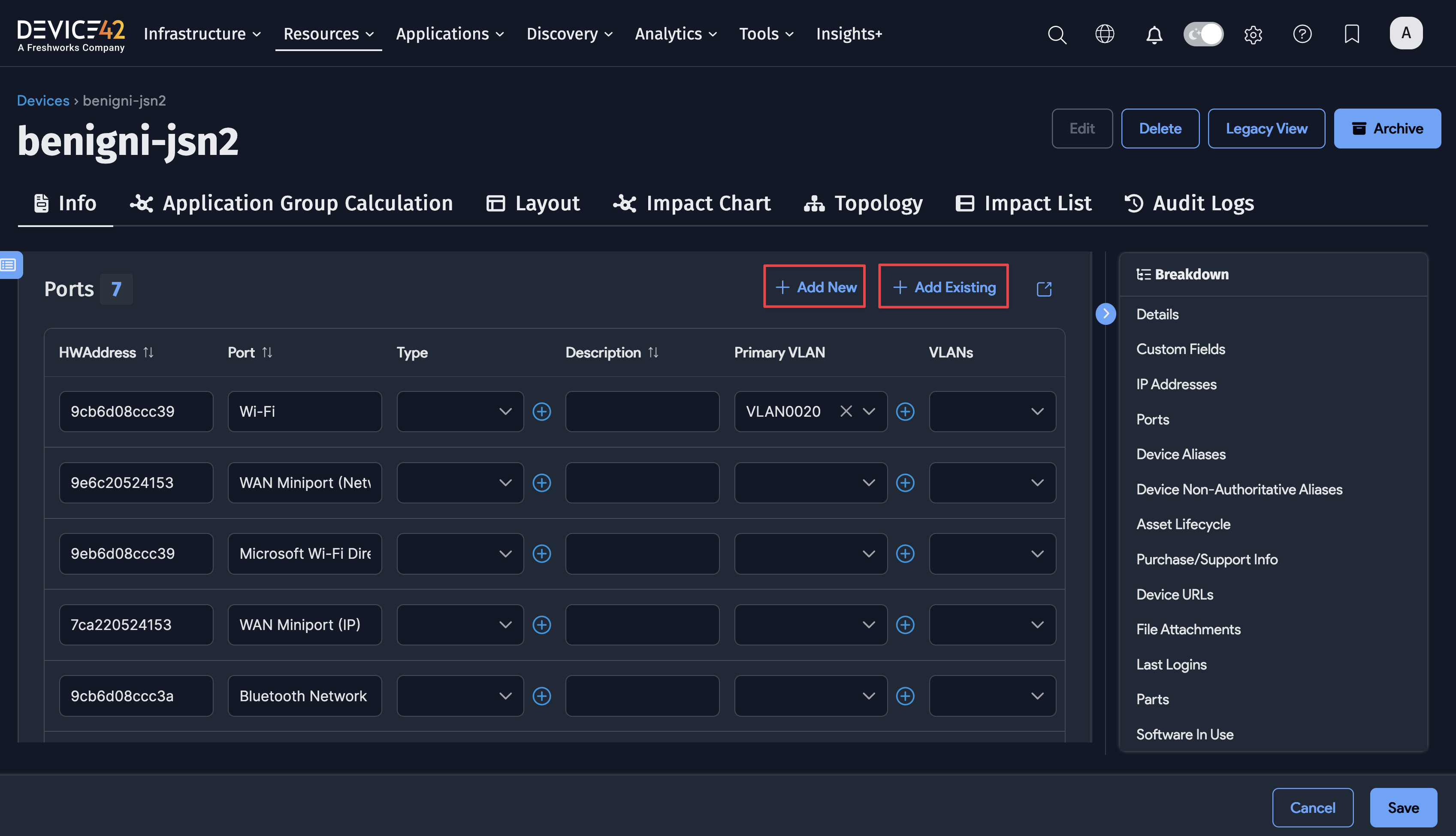
From the Ports section, you can Add New and Add Existing connections. You can also Edit connections or delete them using the trash can icon at the far right.
IP Addresses
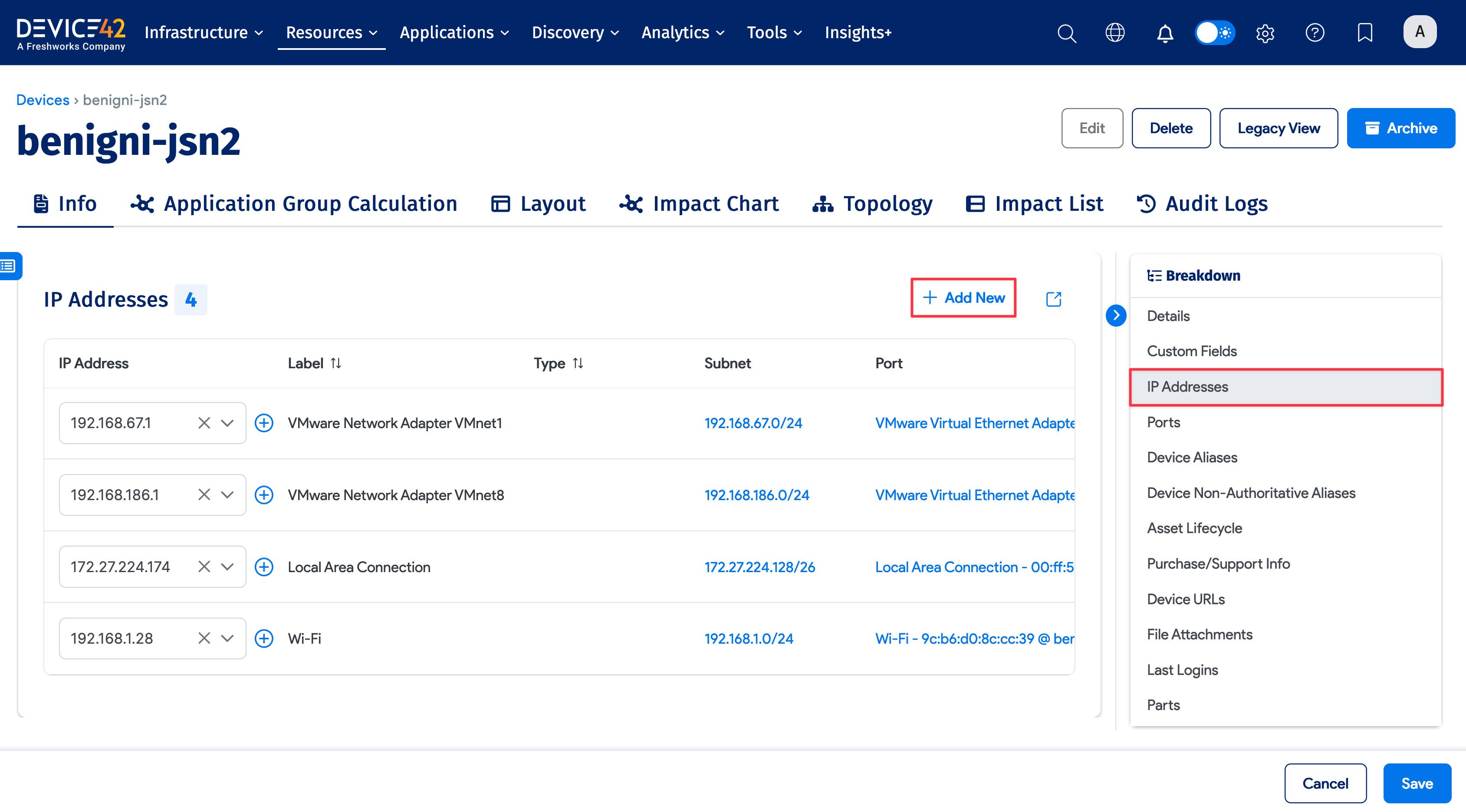
Add an IP address to the device by clicking Add New and selecting an existing IP address from the dropdown, or click the plus icon to create a new one.

Device Alias and Non-Authoritative Alias
Devices often have multiple names — a short hostname, a fully qualified domain name, or names used by different teams. Aliases let you track all of these and choose which name displays in charts and topology maps.
Add multiple aliases to a device using + Add New. Toggle Is Preferred for one of the aliases. You can also add Device Non-Authoritative Alias entries to associate nicknames with the device.
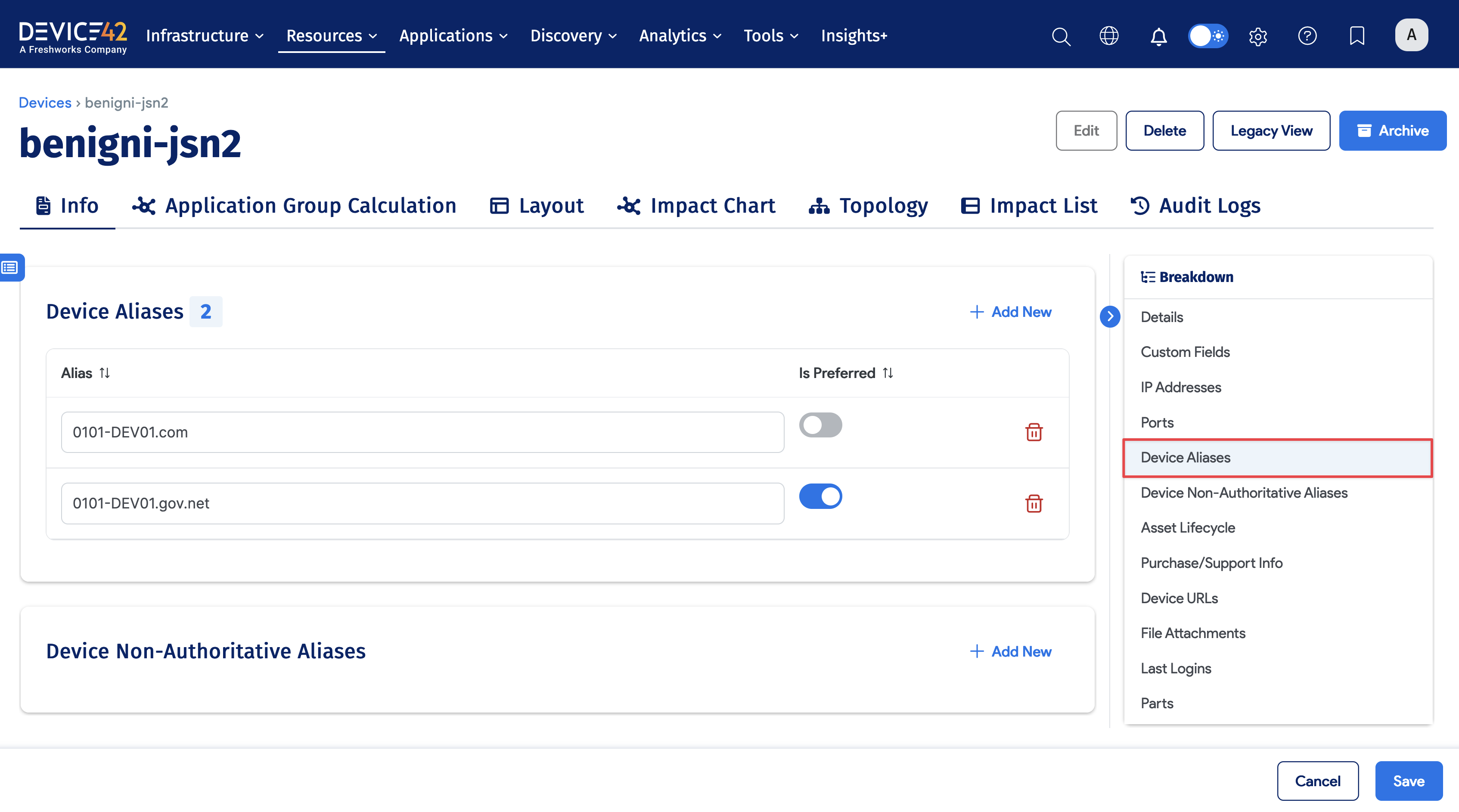
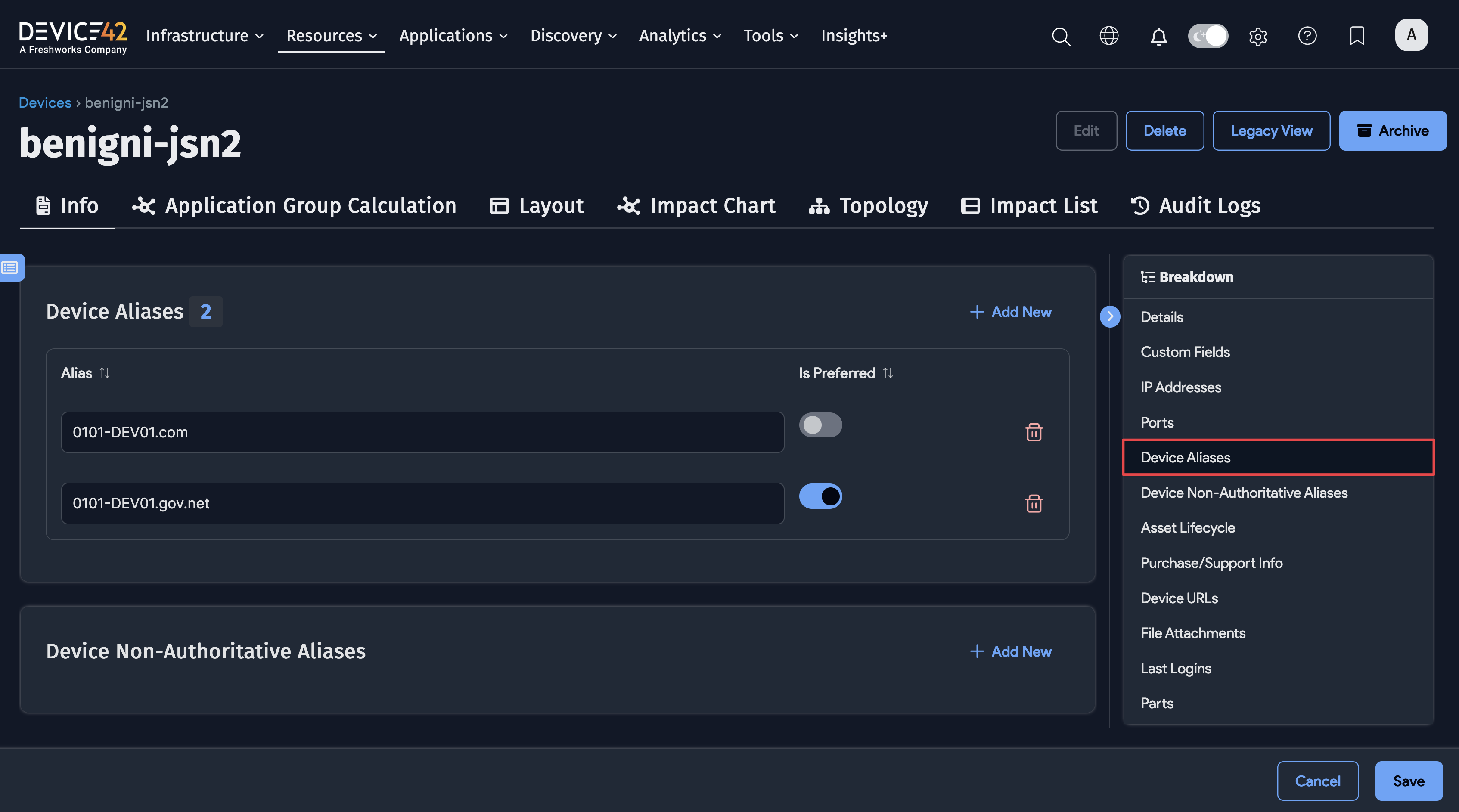
Both alias types add alternate names for the device. You can search for a device using its authoritative alias. However, only the preferred alias is used for device matching during a discovery job.
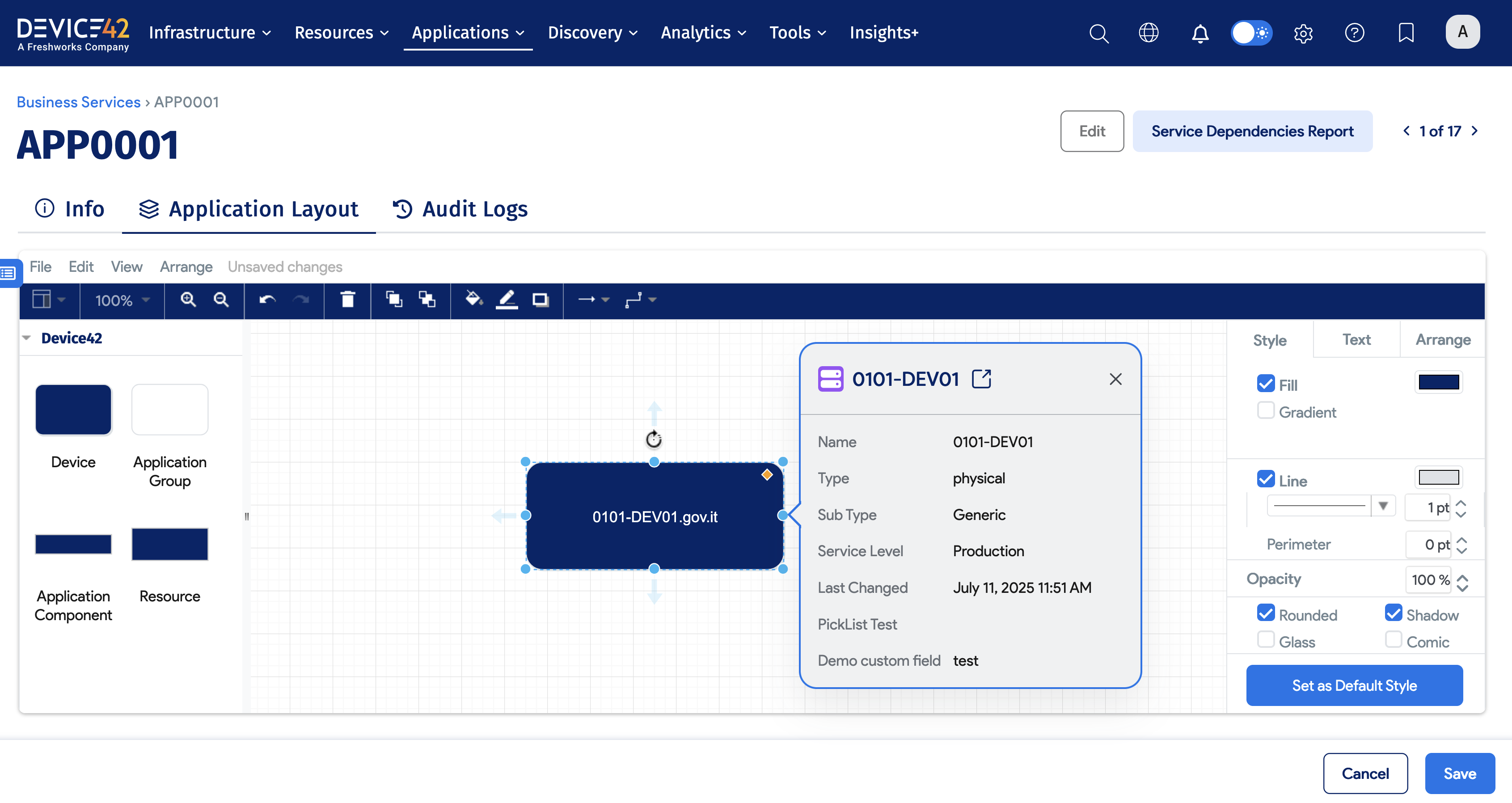
The preferred alias is the name that appears in topology maps, impact charts, and dependency charts. It is also displayed when adding a device to a Business Service.
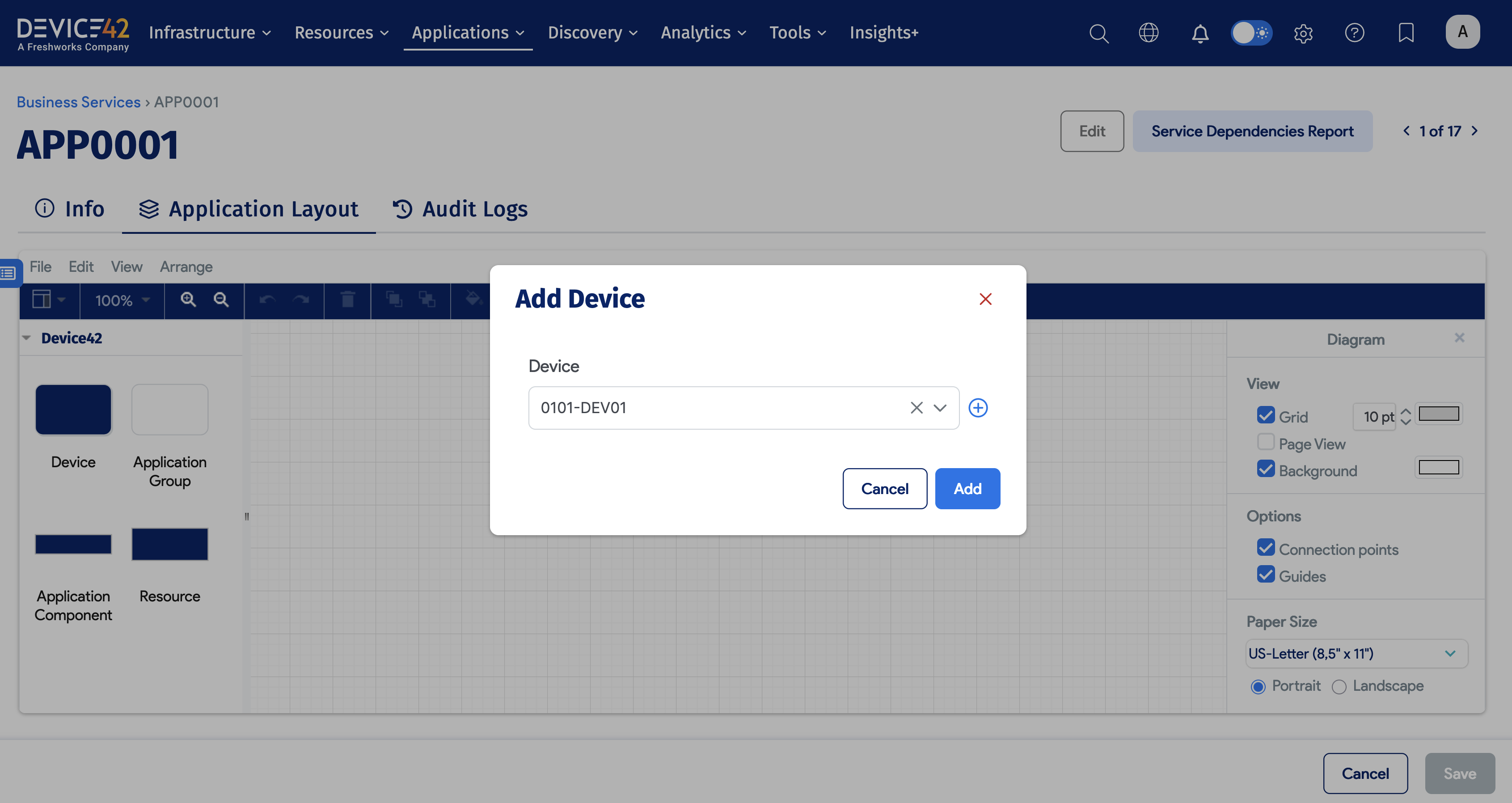
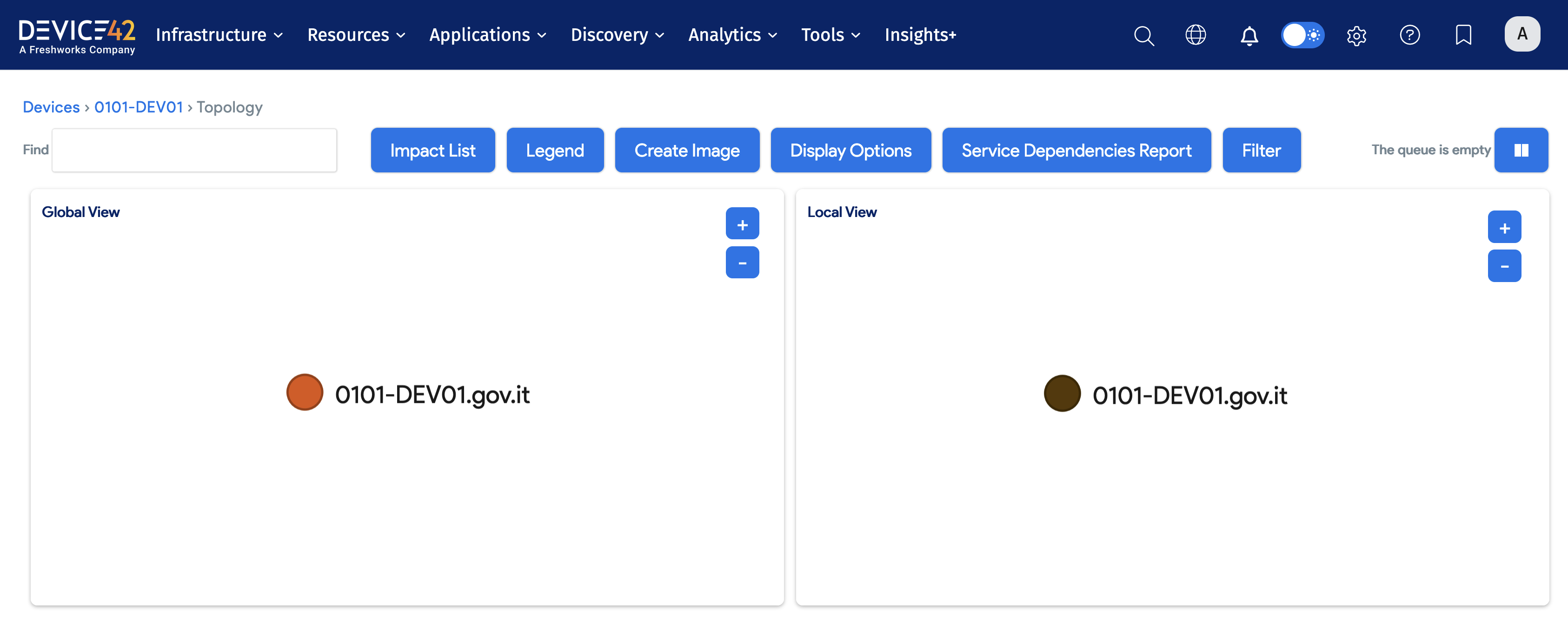
For example, a device named 0101-DEV01 has the preferred alias 0101-DEV01.gov.it.
The preferred alias is displayed on the topology map.
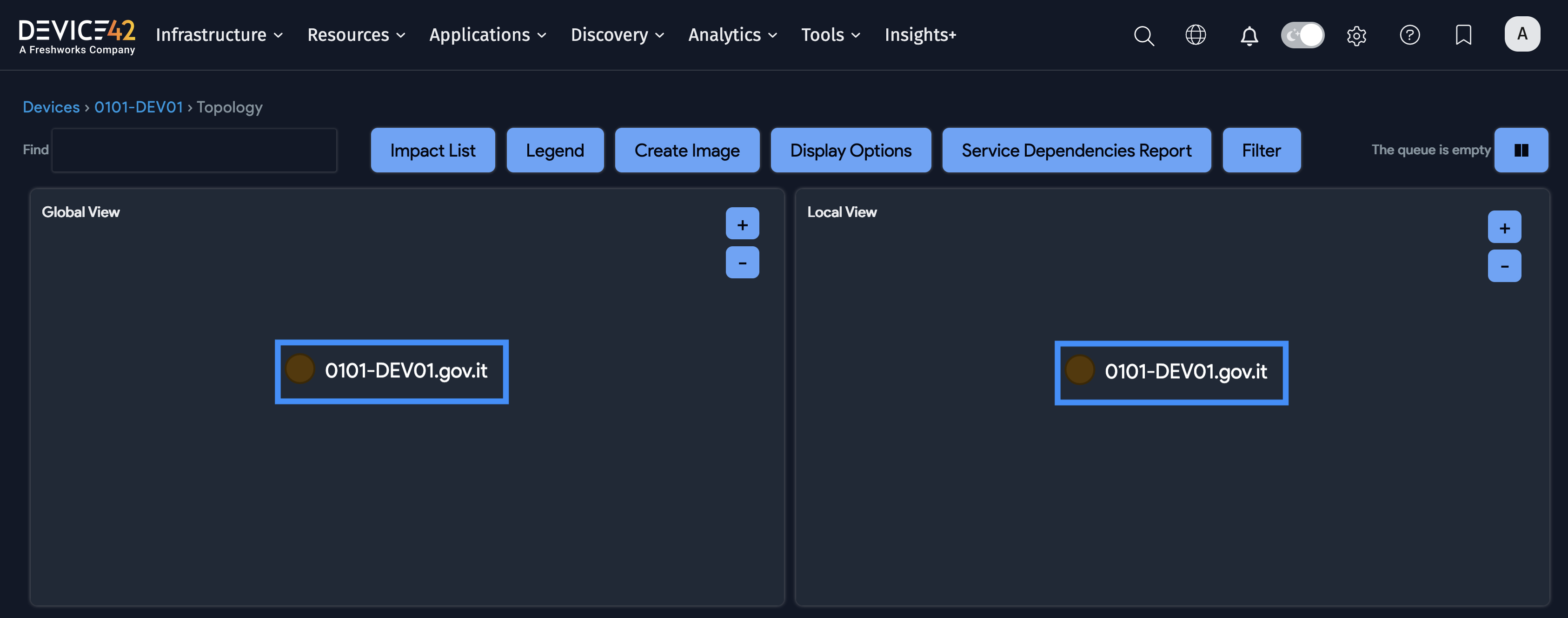
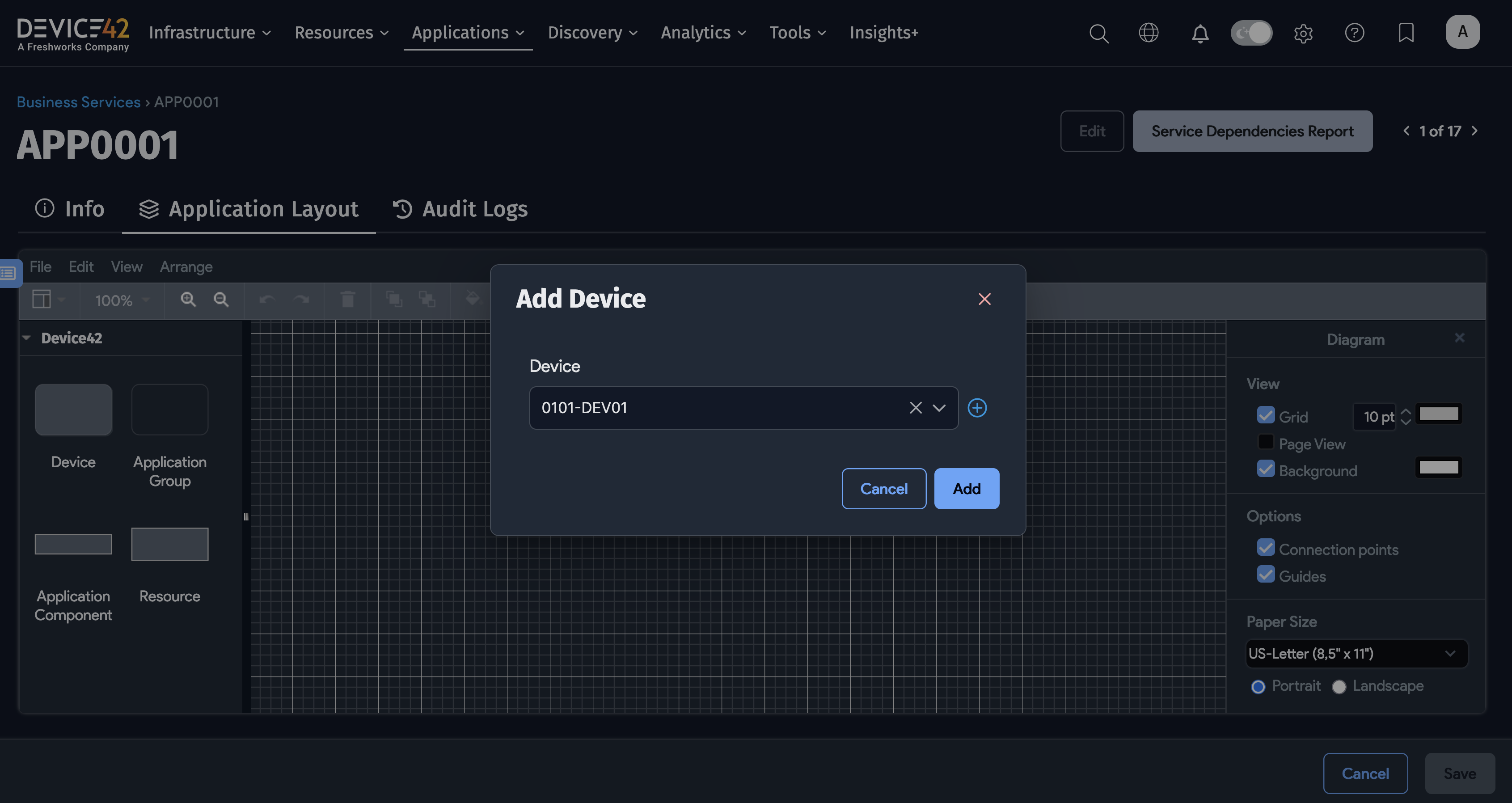
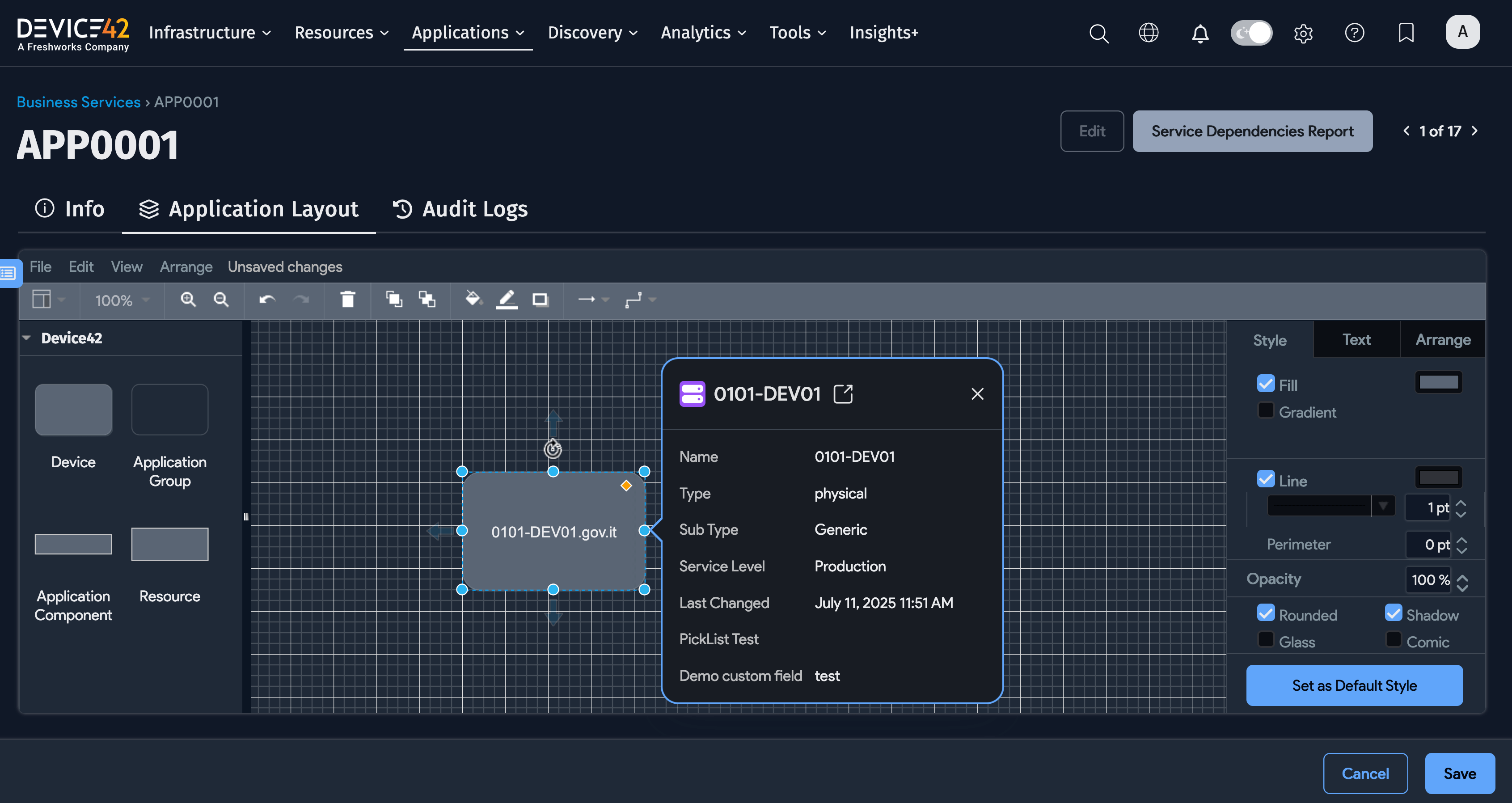
When adding a device to a Business Service, you can search by device name, but the preferred alias is the name displayed on the chart.