Certificates
Device42 tracks SSL certificates discovered across your infrastructure and lets you view validity details, associate certificates with devices and FQDNs, and run expiry reports. For details on creating a certificate discovery job, see Certificate Discovery.
Certificate List Page
The certificate list page, under Applications > Certificates, shows all certificates discovered in Device42 along with their validity details.
Each certificate entry displays the following fields:
- Serial Number
- Key Encipherment
- Key CERT Sign
- Subject Alternative Name
- First Detected date and time
- Encryption method
You can export certificates by selecting them from the list and choosing Export Selected items as CSV from the Actions dropdown.
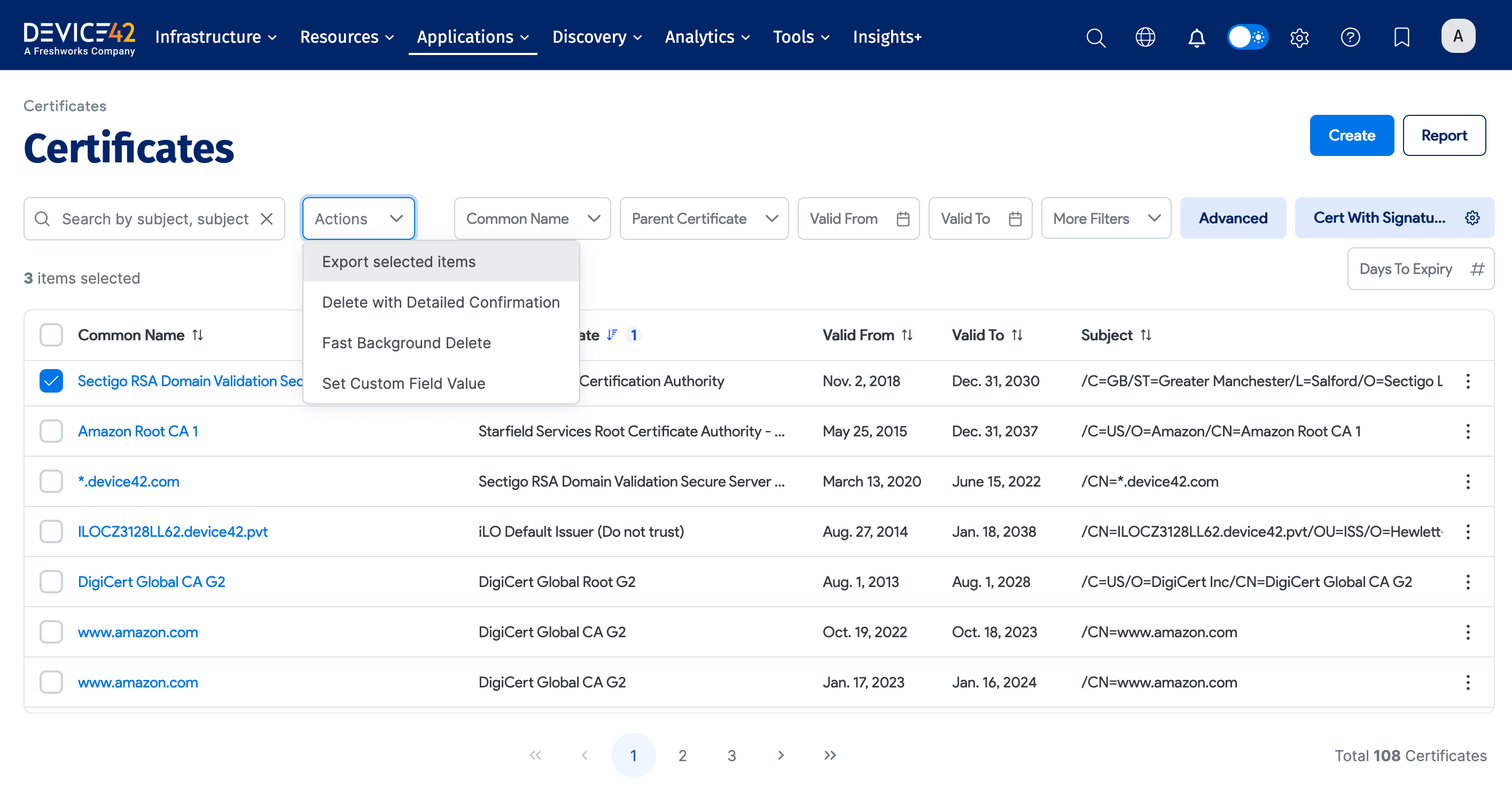
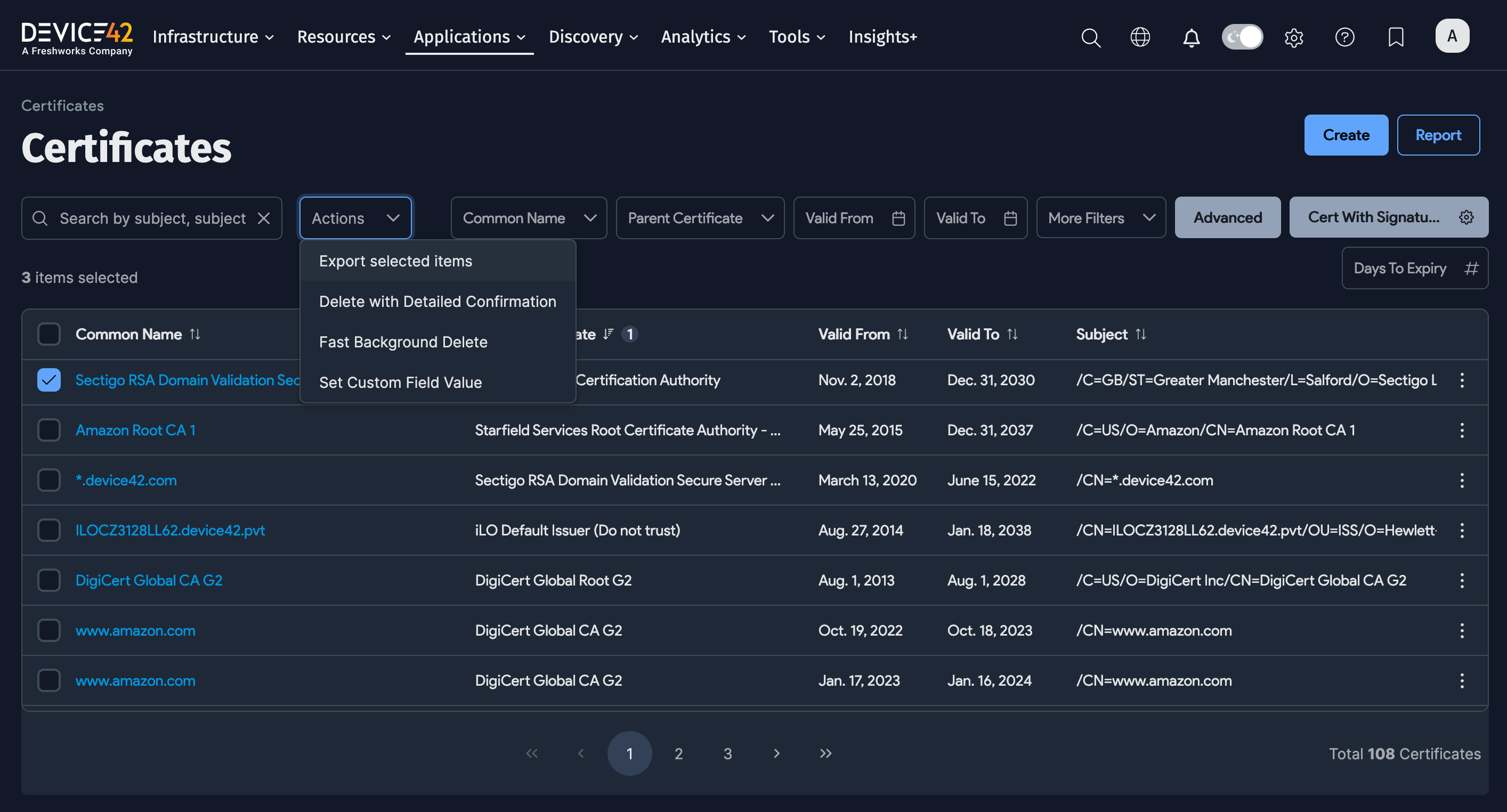
View Certificates
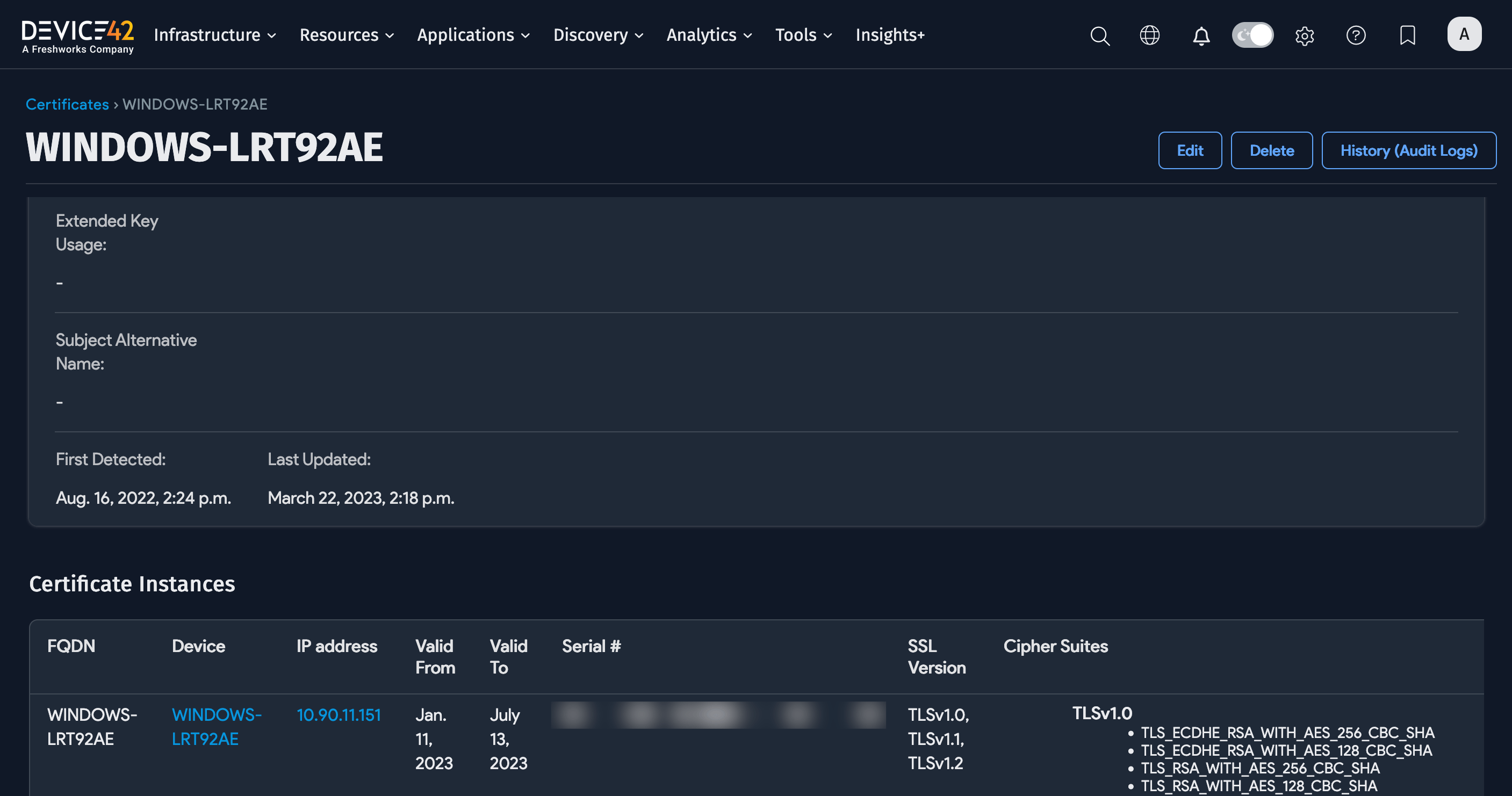
Click the name of a certificate to view it.
You can associate an FQDN, multiple devices, IPs, and different validity dates with a certificate. This is useful for wildcard certificates, where you can see all the FQDNs or subdomains associated with a single certificate.
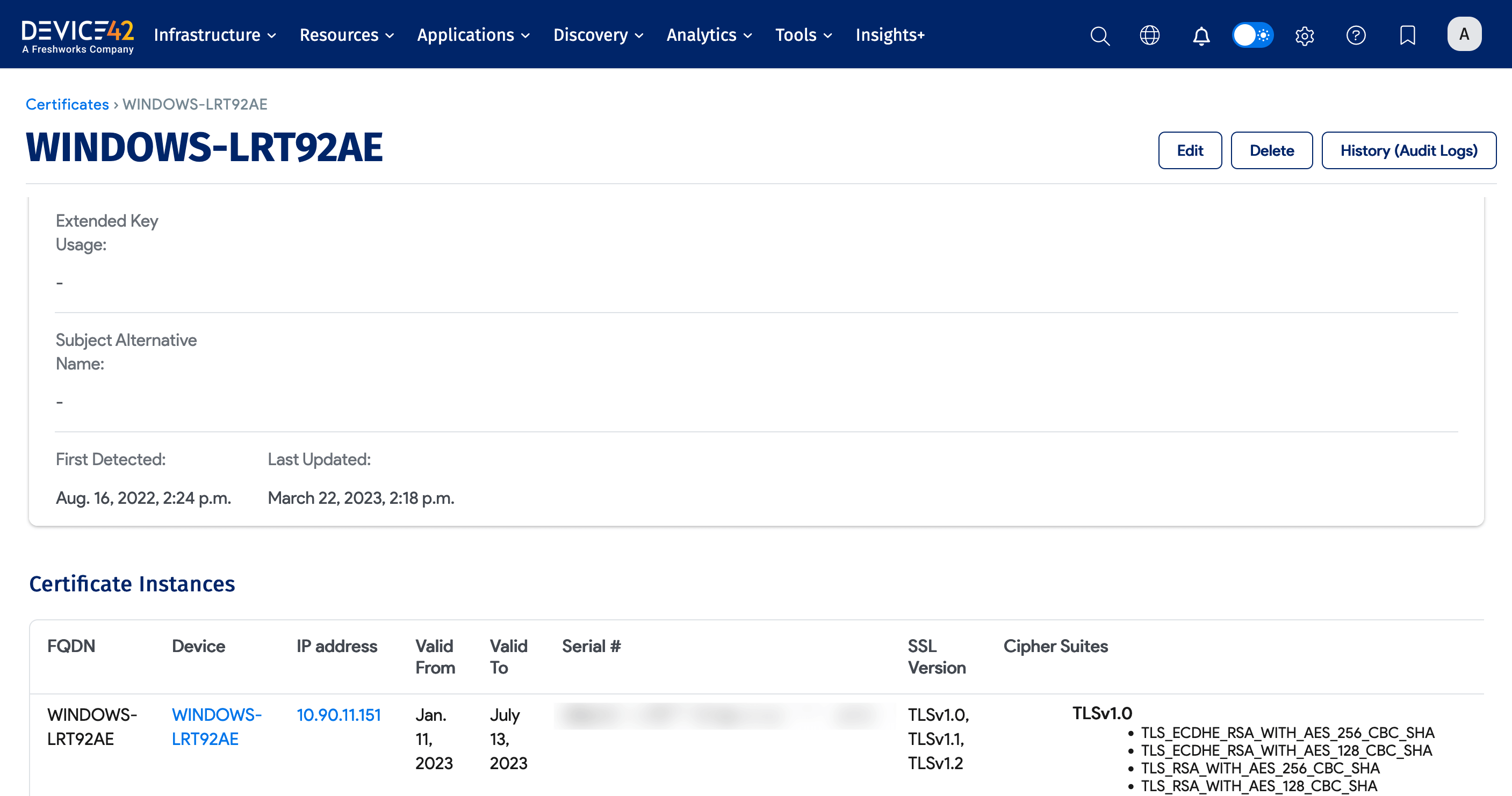
Supported File Formats
Device42 supports certificate uploads in the following formats:
- PEM
- ASN.1
- PKCS12 (pfx/p12)
Certificate Instances
Certificate instances show the device and IP address relationships for individual certificates. Navigate to Applications > Certificate Instances to view them. You can filter by device building, service level, and customer.
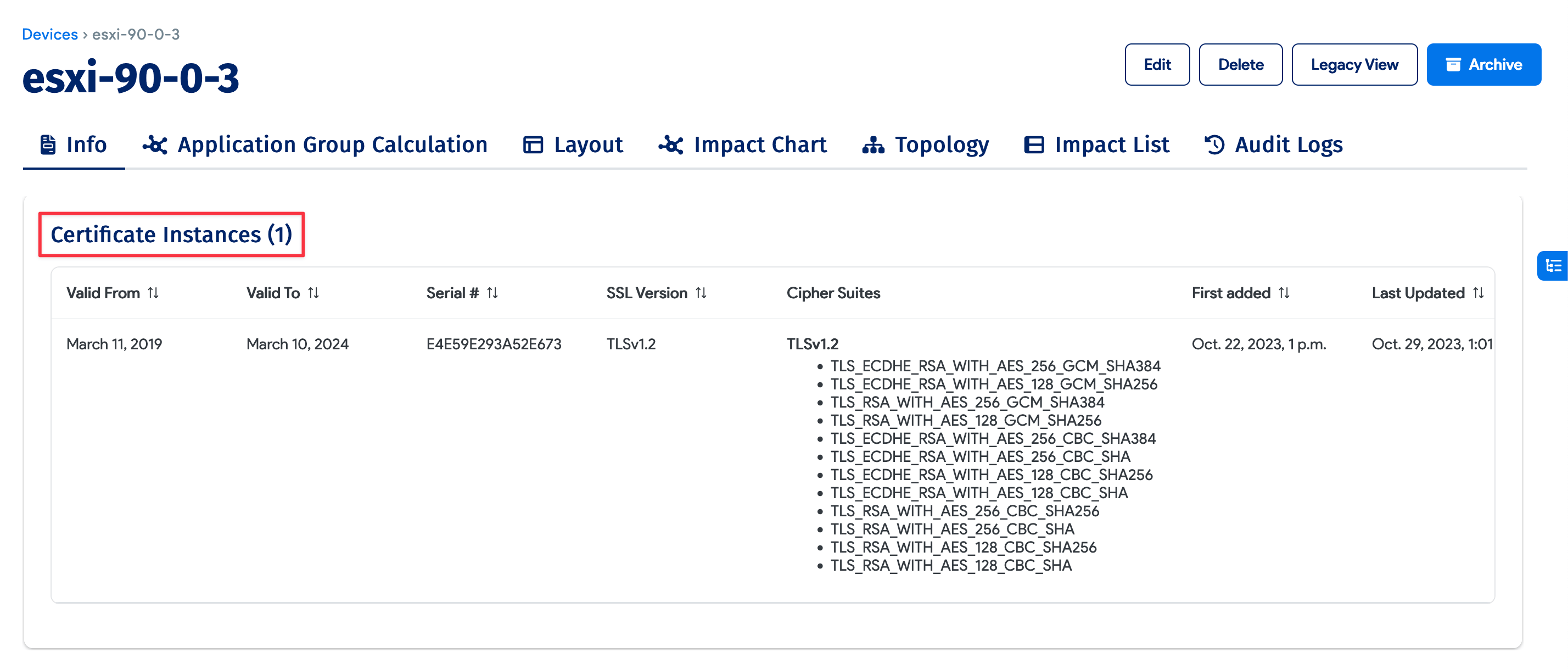
Certificate instances are also displayed in the device details view.
Certificate Reports
When a certificate has multiple valid-to dates, Device42 reports alert based on the oldest date stored for that certificate.
You can run reports to see which devices still need their certificates updated. This is especially useful in large deployments where you want to track update progress.